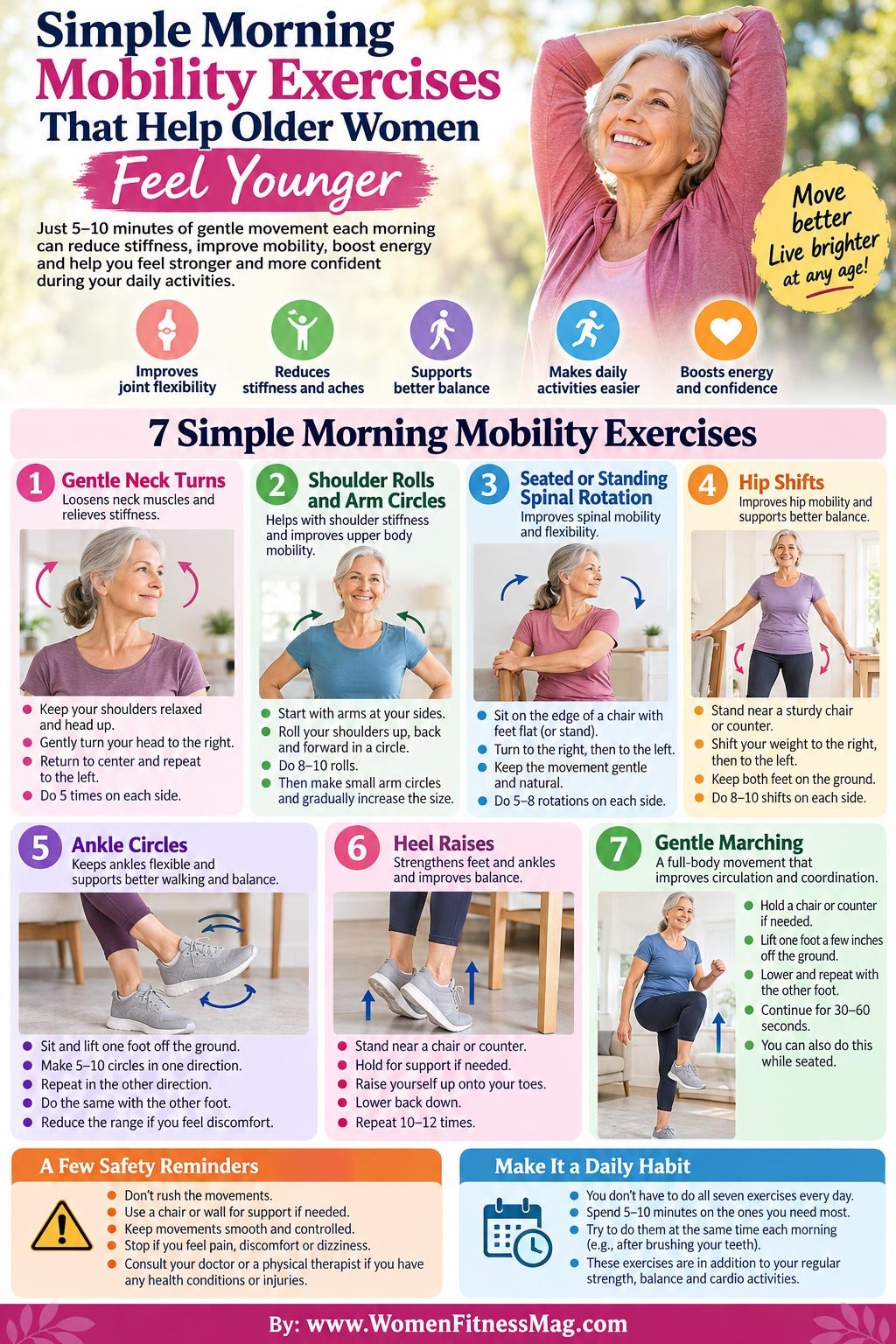

Simple Morning Mobility Exercises That Help Older Women Feel Younger: There is something psychologically soothing about deliberate movement to start your day. You can become awkwardly tied up in the various positions you inhabit over the course of the day and night.
Hips can become so tight that they restrict the full range of motion in your legs. Shoulders can become so restricted that they impede arm movement. Your ankles can become so stiff that they can’t support full leg extension.
These are normal and expected conditions after several hours of rest.
There are a variety of simple movements and exercises to add to your daily repertoire to enhance mobility and reduce some of the effects of aging. If you improve mobility, you are likely to feel more secure and better supported for the activities of daily living.
Maintaining an active lifestyle includes participation in balanced activities that engage the major systems of the body. For adults 65 and older, this means participating in activities that engage the cardiovascular system (aerobic activities), the muscular system (strength training), and the nervous system (balance activities).
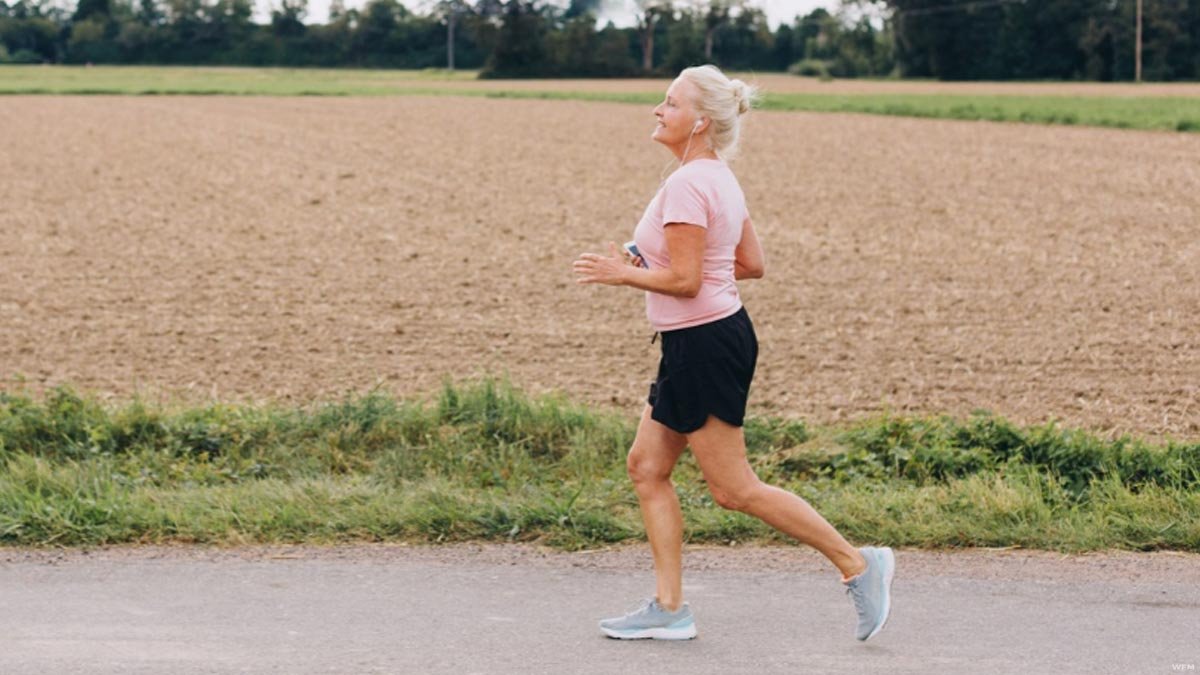
Why Morning Mobility Matters After 60
Being mobile means being able to move your joints and body to perform the functions of everyday life. It means being able to turn your head, reach overhead, get up from a chair, walk, or climb stairs.
According to a number of research studies, mobility exercises improve a person’s range of motion and also help with walking and balancing.
Improving range of motion helps women over 60 to move in a more comfortable way and use less energy to do ordinary tasks.
Doing exercises that improve mobility doesn’t take a long time. Just spending 5 to 10 minutes doing these exercises is better than not doing them at all.
7 Simple Morning Mobility Exercises for Older Women
Find a sturdy chair, counter, or wall for support. Don’t attempt to stretch as far behind you as you can; that leads to poor form and increased risk of injury.
1. Gentle Neck Turns
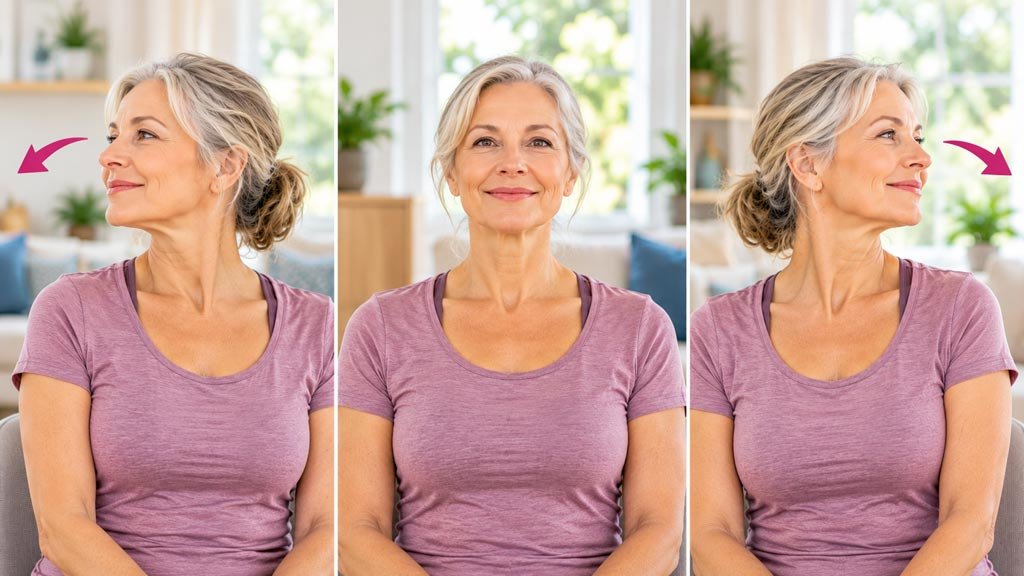
This is meant to be a simple stretch to start your day. More is not better, and you don’t need to push your neck to the side to feel a stretch.
How to do it:
- Start with your shoulders relaxed and head up.
- Gently turn your head to the right.
- Return to the center and repeat to the left.
- Repeat 5 times on each side.
Avoid forcing your head into a deep stretch. The movement should feel easy and controlled.
2. Shoulder Rolls and Arm Circles
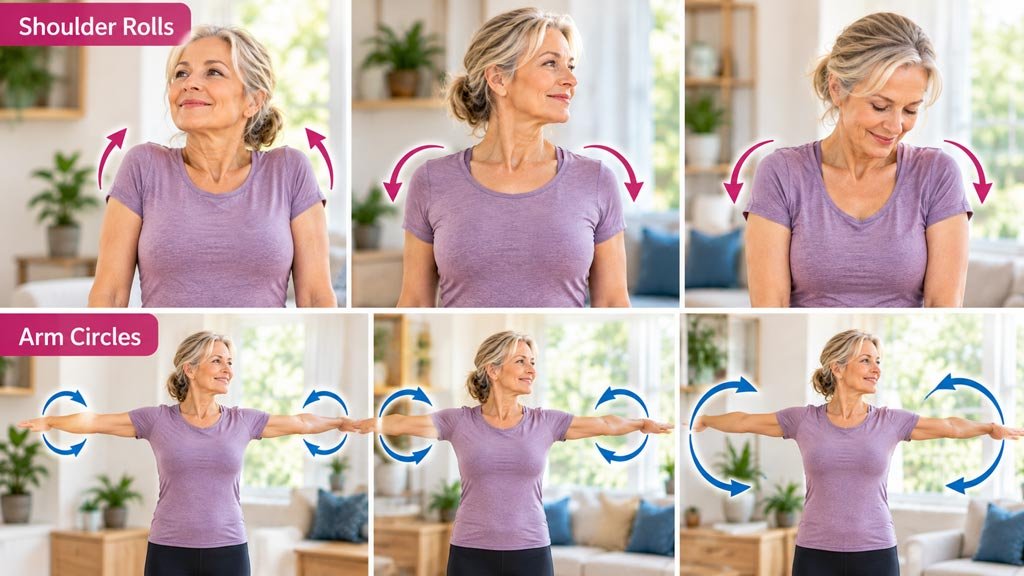
Shoulder capsule stiffness is very common after sitting or lying down for a while.
How to do it:
- Start with your arms at your sides.
- Roll your shoulders up and back and forward in a circle.
- After 8-10 rolls, start small arm circles and gradually increase the size of the circles.
Keep the movement relaxed rather than swinging your arms.
3. Seated or Standing Spinal Rotation
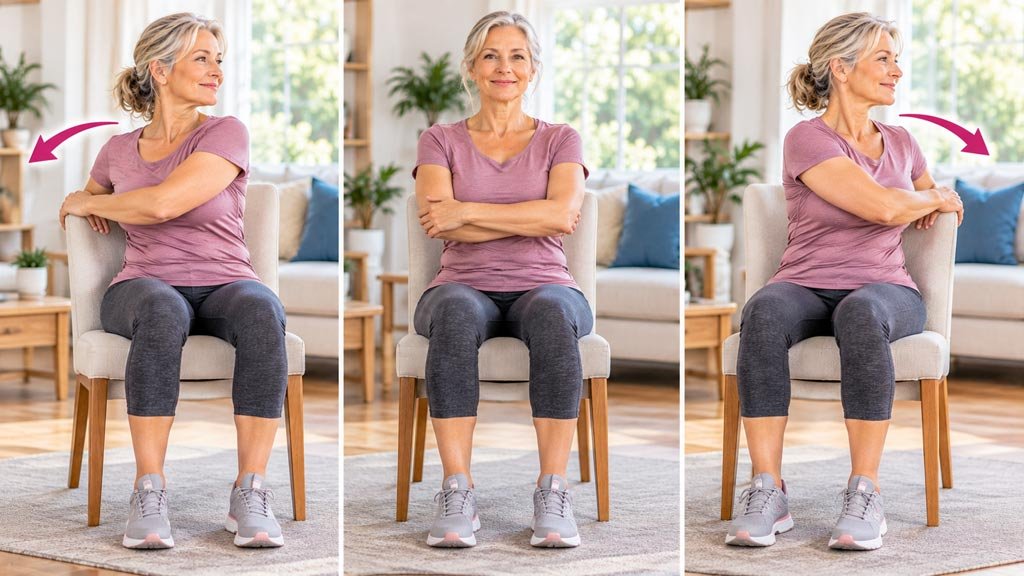
The spinal rotators can be quite stiff. Starting with the upper body and working the spinal rotators in a controlled motion can help with the range of motion of the spine.
Seated version:
- Start by sitting on the edge of a chair with your feet flat.
- Bring your arms across your body and turn to the right.
- Turn the other way to the center and repeat.
- Continue for 5-8 rotations on each side.
Move in a way that is most natural to you. The objective isn’t to contort and bend as far as possible.
4. Hip Shifts
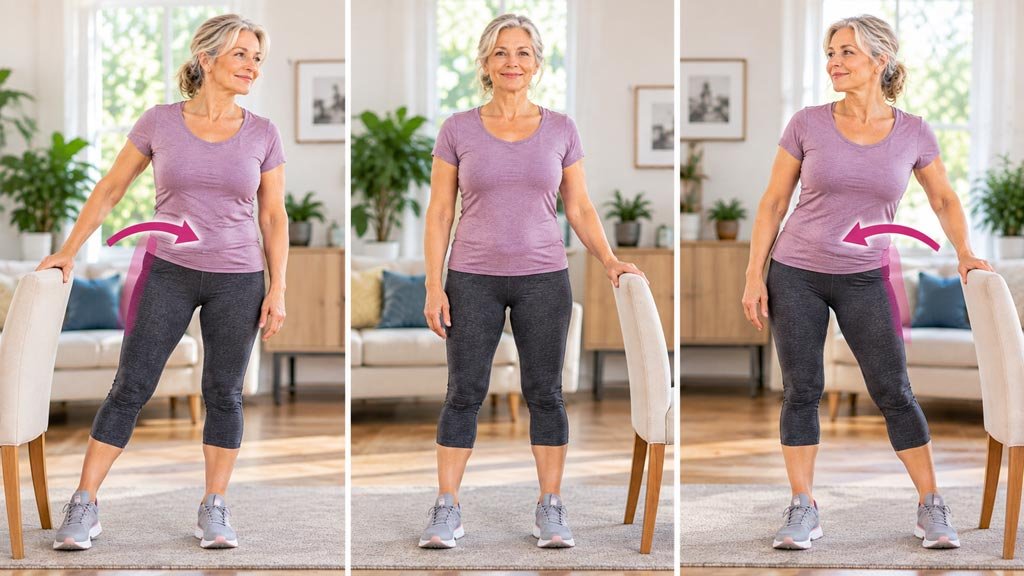
Hip movement plays a large role in the various ways we use our lower body to transition between standing, walking, and sitting.
How to do it:
- Stand near a sturdy chair or in front of a counter.
- Lightly grip the chair/counter.
- Shift your weight to the right.
- Return to the center.
- Shift the weight to the left.
- Repeat 8-10 times on each side.
Don’t let your weight shift so far that you lose your balance and your feet come off the ground.
5. Ankle Circles
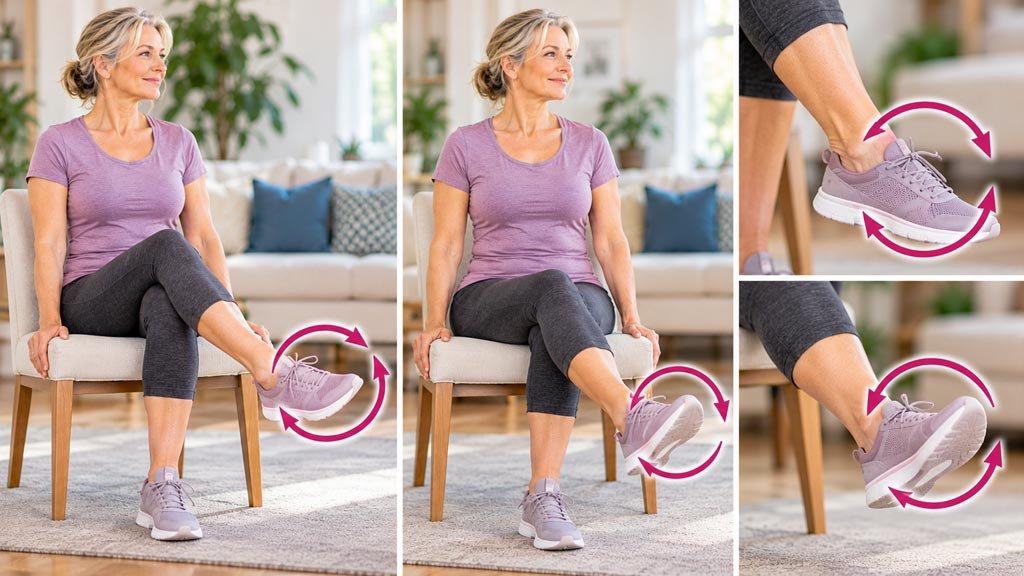
Like with other smaller joints, the ankle receives less attention, but is utilized in all forms of locomotion.
How to do it:
- Sit, and with your foot off the ground, make 5-10 circles in one direction.
- Repeat in the other direction.
- Repeat with the other foot.
If lifting your foot off the ground causes discomfort, reduce the range of motion.
6. Heel Raises
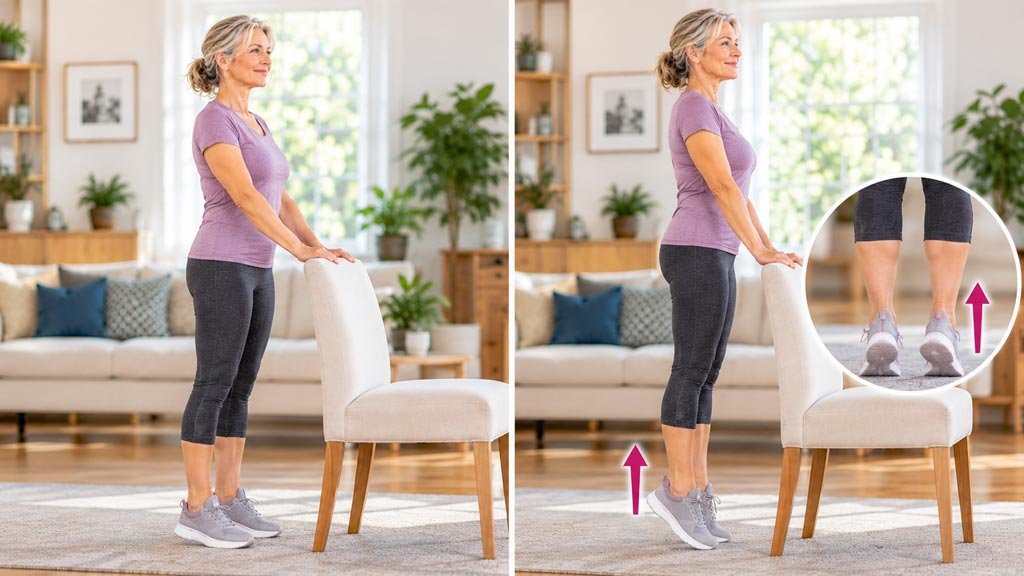
This exercise combines gentle ankle movement with light strengthening.
How to do it:
- Stand near the chair/counter.
- With your feet slightly apart, hold the chair/counter.
- Raise yourself up onto your toes.
- Lower yourself back to the starting position.
- Repeat 10-12 times.
If you need help balancing, use the support with both hands.
The impact of ankle and foot exercises on older adults’ health is of great interest. Some studies have evaluated the effect of these exercises on ankle strength and mobility, while other studies have assessed the influence of ankle exercises on balance and the rate of falling.
7. Gentle Marching
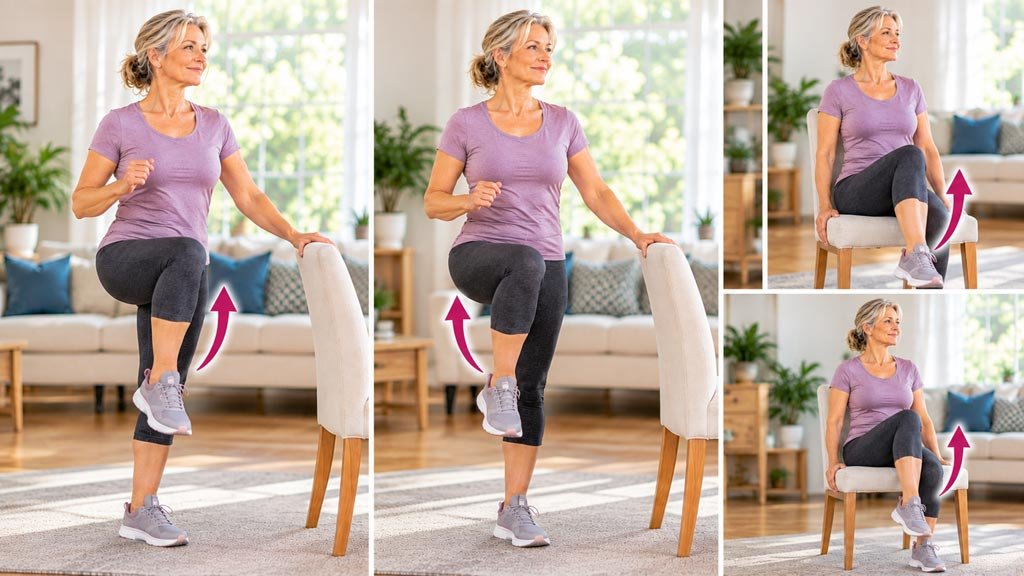
This exercise focuses on full-body movement.
How to do it:
- Find a chair or counter to hold on to if needed.
- Lift one foot so it is a couple of inches off the ground.
- Lower your foot and repeat with the other foot.
- Continue to alternate for 30 to 60 seconds.
- Keep your movements slow and controlled.
You can perform this exercise while seated if you do not feel steady while standing.
The CDC recommends balance exercises, and in general, the activities the CDC suggests older adults participate in to stay healthy include balance activities.
Make Your Morning Routine Work for You
You are not obligated to perform all seven movements on a daily basis.
Depending on what sort of tightness you’re dealing with on a given day, you may spend a short amount of time doing a few mobility exercises. For example, you may do 5-10 minutes of shoulder rolls and other rotational and spinal movements. Perhaps you could add in some hip and ankle circles and a set or two of heel raises and marches.
The idea here is to create a mobility practice that you are actually going to do. One way to help this stick is to tie the practice to an existing daily behavior. Maybe that is right after you use the bathroom to brush your teeth and get ready for the day.
Of course, these practices are in addition to your regular practices for health and wellness. This includes practices for strength and balance as well as cardiovascular health.
There are also practices for functional strength and movement that enhance health and wellness for those 60 and over.
A Few Safety Reminders
Practicing morning movements can also help you avoid getting injured throughout the day.
Just keep these tips in mind:
- Don’t rush the movements.
- You can use the walls or a chair to help you with the movements.
- Your movements should be smooth. If you feel pain or discomfort, don’t do the movement.
- If you feel dizzy or unwell, stop the exercises and take a break.
If you have a condition or injury that is impacting your balance and you are starting a new exercise program, consult your doctor or a physical therapist. Also, consult a professional if you have questions about starting an exercise program.
Start the Day With Movement
Trying to regain the vitality of your youth is not about going after the things you once had. It is about relieving the ailments that come from aging. The process is simple. It is about getting up in the morning and moving.
Mobility exercises for the elderly are not time-consuming. With consistent practice, elderly individuals can improve and maintain the mobility and independence required to perform the activities of their daily living.
You should set aside at least 5 or 10 minutes in the morning to improve your mobility. With practice, you can improve the circulation in your body. With improved circulation, you can relieve stiffness and aches that come with old age.
Author Bio:
Bob Bies is the founder and publisher of Seniors Fitness Circle, a resource dedicated to helping adults over 60 stay active, strong, and independent. His work focuses on making safe, structured movement accessible through practical, beginner-friendly fitness guidance.
Related Infographics: