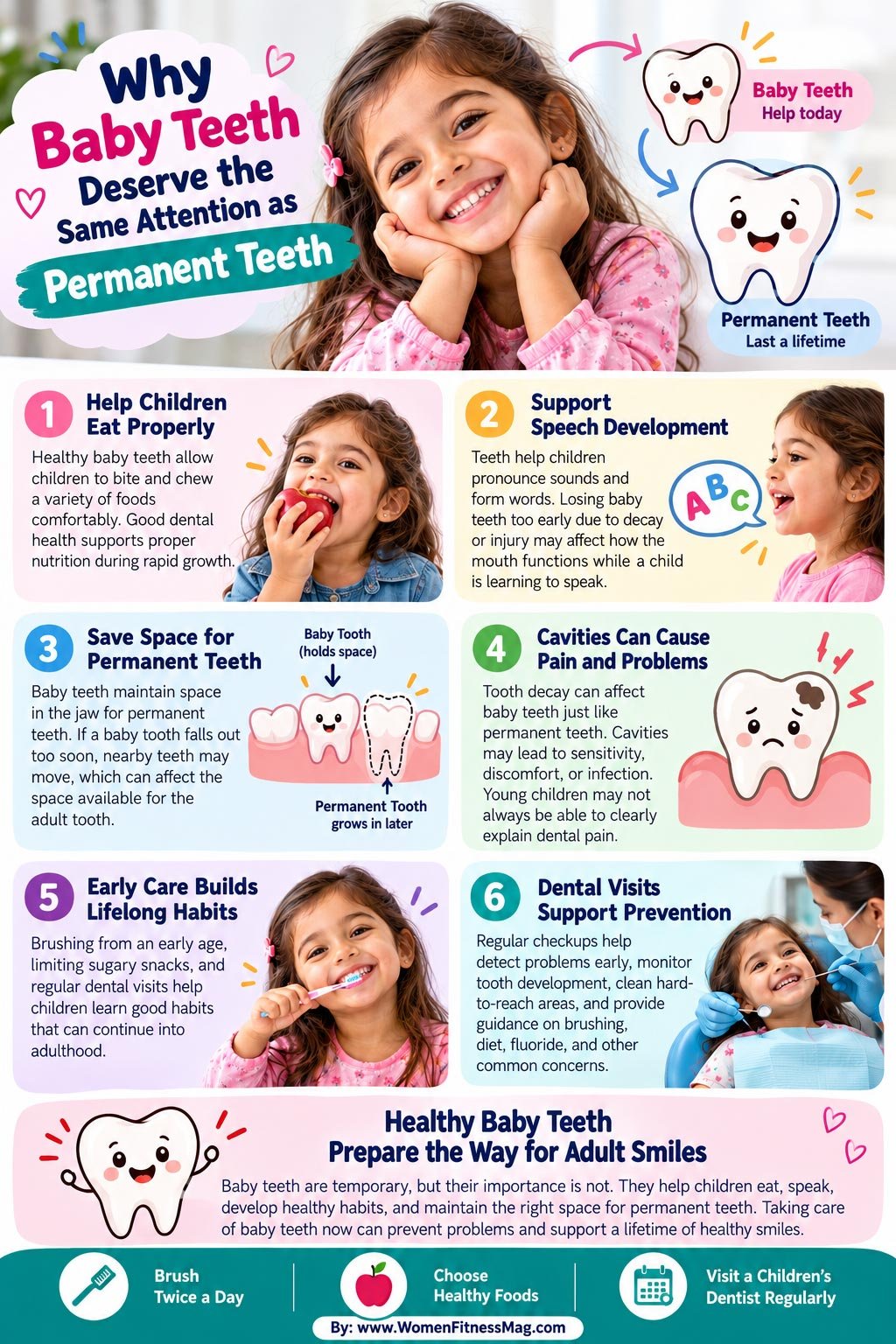
Why Baby Teeth Deserve the Same Attention as Permanent Teeth : Baby teeth are temporary, but their importance is anything but temporary. Since these teeth eventually fall out, some parents may assume that cavities or other dental problems are less concerning than issues affecting permanent teeth. In reality, primary teeth play several important roles in a child’s growth, comfort, nutrition, speech, and future oral health.
Taking care of baby teeth from the moment they appear can establish a strong foundation for healthy permanent teeth. Regular home care, balanced nutrition, and visits to a children’s dentist can help parents protect their child’s smile during these important developmental years.
Baby Teeth Help Children Eat Properly
Healthy teeth allow children to bite and chew a variety of foods comfortably. When a baby tooth develops significant decay or becomes painful, a child may begin avoiding certain foods or chewing only on one side of the mouth.
Good dental health therefore supports comfortable eating during a period when children are growing rapidly. Regular dental checkups, brushing your teeth, and using fluoride as directed by a dentist can all help lower the risk of problems that make it hard to eat.
They Support Speech Development
Teeth also contribute to the way children learn to pronounce sounds and form words. The position of the teeth, tongue, and lips works together during speech development.
Losing certain baby teeth naturally is part of growing up. However, losing them much earlier than expected because of decay or injury may affect how the mouth functions while a child is learning to speak. Protecting primary teeth helps maintain the normal oral structures involved in this process.
Baby Teeth Save Space for Permanent Teeth
One of the most important functions of primary teeth is maintaining space in the jaw for permanent teeth. Each baby tooth occupies a position that helps guide the developing adult tooth underneath it.
If a baby tooth falls out too soon, teeth next to it may move in slowly to fill the space. This can potentially affect the space available when the permanent tooth begins to emerge. Depending on the individual situation, a dental professional may recommend monitoring the area or using a space maintaining appliance.
This is one reason dental problems involving baby teeth should not simply be ignored because the teeth will eventually fall out.
Cavities in Baby Teeth Can Cause Pain
Tooth decay can affect primary teeth just as it affects permanent teeth. A small cavity can progress over time and may eventually cause sensitivity, discomfort, or infection if it reaches deeper structures of the tooth.
Young children may not always clearly explain dental pain. Changes in eating habits, difficulty sleeping, avoiding brushing, or sensitivity to certain foods can sometimes indicate a problem. Routine dental visits provide an opportunity to identify concerns before they become more complicated.
Early Care Builds Lifelong Habits
Childhood is an ideal time to establish routines that can continue into adulthood. When brushing and dental visits become normal parts of everyday life, children can gradually learn responsibility for their own oral health.
Parents can support this process by supervising brushing, limiting frequent sugary snacks and drinks, and demonstrating positive dental habits themselves. Making oral care consistent rather than treating it as an occasional task helps children understand that teeth require daily attention.
Dental Visits Can Support Prevention
Regular dental appointments are not only about treating cavities. They can also provide preventive guidance tailored to a child’s age and development.
A dental professional can monitor tooth eruption, check the gums and developing bite, assess areas that may be difficult to clean, and offer recommendations about brushing techniques and dietary habits. Preventive measures may also be recommended depending on the child’s individual needs.
These appointments give parents an opportunity to ask questions about thumb sucking, pacifier use, fluoride, tooth eruption, dental injuries, or other concerns that commonly arise during childhood.
Healthy Baby Teeth Prepare the Way for Adult Smiles
Permanent teeth deserve careful attention, but good oral health should begin years before they arrive. Baby teeth help children eat, speak, develop healthy habits, and maintain appropriate space for the teeth that will eventually replace them.
Treating primary teeth as an important part of overall health can help prevent unnecessary discomfort and support normal dental development. By combining consistent home care with appropriate professional dental care, parents can give children a stronger foundation for maintaining healthy smiles as they grow.
Related Infographics: