




Women and Family Health: Understanding CLL Disease Treatment Options: A diagnosis of chronic lymphocytic leukemia usually appears in a family’s life quite unexpectedly. The family immediately faces a large volume of medical information, terms, and test results. In fact, when one of the loved ones falls ill, it significantly changes the daily routine and the usual rhythm of the entire home.
First reactions often include anxiety, confusion, and a rush to find answers about what lies ahead. Navigating medical appointments, keeping track of diagnostic reports, and managing emotional stress can feel overwhelming during the initial weeks.
Awareness of how the disease develops and what treatment pathways exist in modern medicine brings back a sense of confidence. Parents, husbands, or adult children get the opportunity to ask doctors the right questions and calmly plan for the future.
How the Disease Behaves and Why Patience is Key
Chronic lymphocytic leukemia is a type of slow-developing damage to the blood and bone marrow. Altered white blood cells gradually accumulate in the body and stop performing their usual protective functions. Over time, the number of such cells grows, but the process happens very slowly.
Interestingly, in the early stages, a person often does not feel any malaise or fatigue at all. The disease is very frequently discovered completely by chance during a routine complete blood count during a checkup.
Precisely because of this slow development, hematologists often advise a watch-and-wait tactic. This sometimes seems strange to relatives; they want to start active measures right away. However, protocols require starting active prescriptions only when clear clinical symptoms or changes in blood counts appear.
How Doctors Select the Right Treatment
Today, approaches to patient management have changed radically compared to what existed even ten years ago. Previously, classical chemotherapy, which affected all cells in general, was considered the key option. Now, targeted remedies are preferred.
The choice of regimens always depends on age, the presence of other comorbidities, and the genetic profile of the cells. Laboratory studies help doctors understand which specific mutation caused the malfunction. This makes it possible to select substances that block only abnormal proteins, barely touching healthy tissues.
When it comes to choosing a specific method of cll disease treatment, the hematologist always calculates the duration and form of administration of the remedies. For the family, this means an opportunity to maintain a normal rhythm without constant stays in the hospital.
Treatment Options and How They Work
There are several major groups of drugs in the arsenal of specialists. Each type works differently, targets specific processes in the body, and has its own features of application in clinical practice.
Before any medication is prescribed, the condition of the kidneys, heart, and liver is checked mandatorily. Thorough baseline screening, including complete blood counts and organ function panels, is required to ensure the body will tolerate the chosen regimen well and to minimize potential toxicity risks.
Here are some modern treatment approaches:
-
Targeted BTK Inhibitors.
These drugs block the enzyme Bruton’s tyrosine kinase (BTK), which sends a continuous signal to abnormal B cells to grow and hide in the lymph nodes. The first generation of drugs binds tightly to the target protein at C481. This “turns off” the survival of leukemia cells, forcing them to enter the bloodstream and gradually die.
-
BCL-2 Inhibitors.
Cancer cells accumulate because they have blocked their own natural death mechanism (apoptosis) using the BCL-2 protein. Inhibitors of this type neutralize this protein shield and turn on nature’s self-destruction program again. In order for the kidneys to calmly remove the remains of cells, the dosage of such drugs is increased gradually, week by week.
-
Monoclonal Antibodies.
Monoclonal antibodies work as an accurate guide for your own immunity. They find and “tag” specific proteins (most often CD20) on the surface of affected lymphocytes. After that, the body’s own protective cells easily recognize and break down the pathological bodies.
-
Next-Generation Non-Covalent BTK Inhibitors.
Over time, the disease can adapt and change the structure of the protein (for example, the C481S mutation occurs), due to which first-generation drugs can no longer attach. New-generation non-covalent inhibitors solve this problem: they fix themselves in a different pocket of the enzyme without binding to this point, returning control over the disease.
After starting any of these treatments, regular checkups are important. Blood tests help the doctor monitor how well the treatment is working, spot any potential drug interactions, and make adjustments to ensure the patient is comfortable.
Managing Treatment at Home
Taking many modern agents occurs orally at home. This makes it possible to continue working, communicating with loved ones, and doing usual chores.
All instructions from the doctor regarding time of intake and dosage must be followed very strictly. Any changes in well-being or the appearance of new symptoms are a reason to call the hematologist.
Most side effects can be successfully controlled if detected at the beginning of the course. Usually, the body gradually adapts to the substances, and the condition stabilizes.
Support and Emotional Health of the Family
The role of the family during any medical course is decisive. A calm atmosphere at home and an understanding of the situation help avoid unnecessary stress. Everyday little things are of great importance. A healthy diet, walks in the fresh air, and quality sleep are a good start to recovery of strength.
It is also important to care about protection against seasonal infections, as the immune system needs extra attention. Simple safety measures at home help people feel confident.
Openly talking about your fears and feelings eases the emotional state of all family members. If necessary, it is worth reaching out to psychologists or looking for relevant support groups.
Modern medicine allows doctors to confidently keep chronic lymphocytic leukemia under control for many years. The main thing is close cooperation with the medical team and taking care of your own health.
Related Infographics:
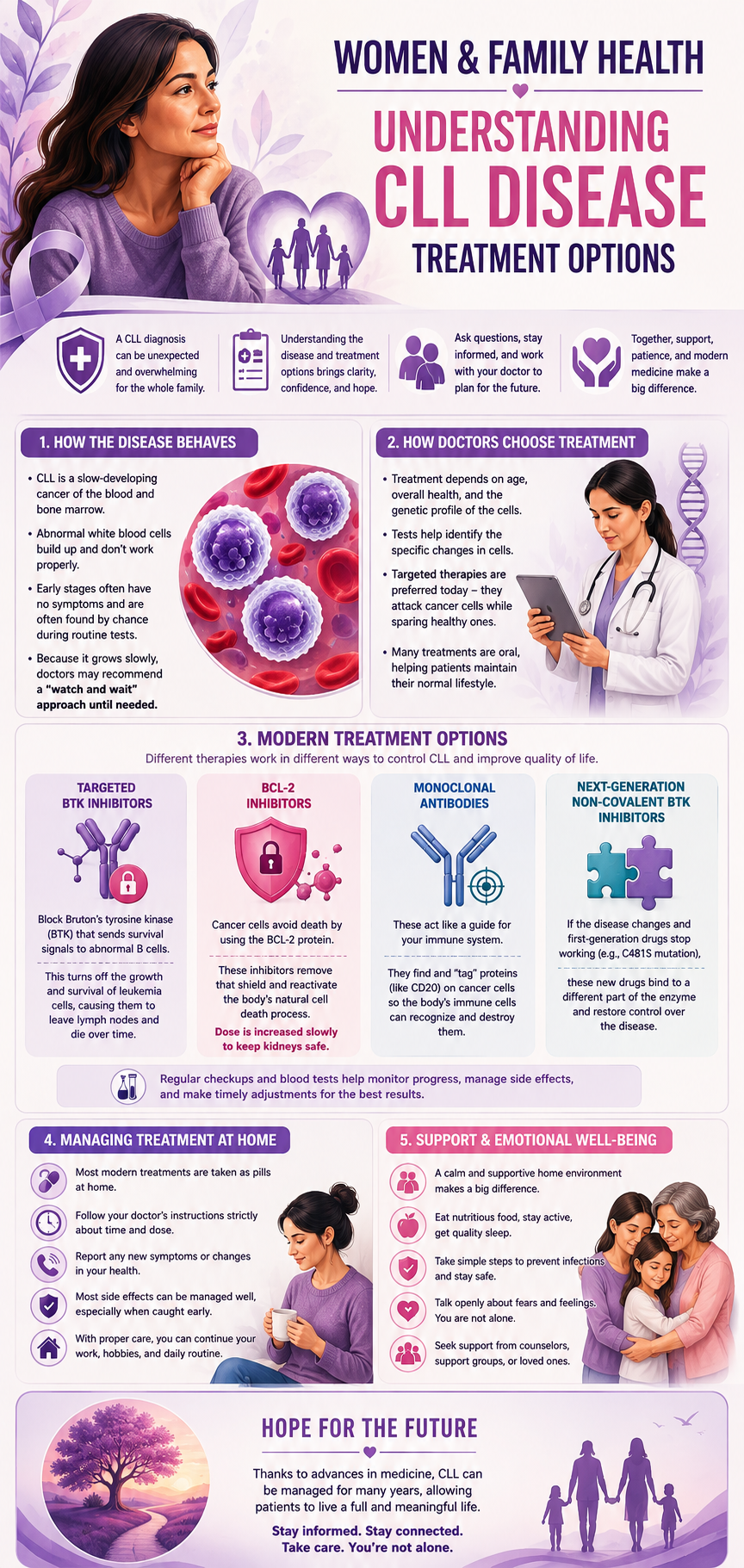
Women and Family Health: Understanding CLL Disease Treatment Options
Disclaimer: The information provided in this article is intended for educational purposes only and should not be interpreted as medical advice, a clinical guideline, or a recommendation for any specific treatment.