



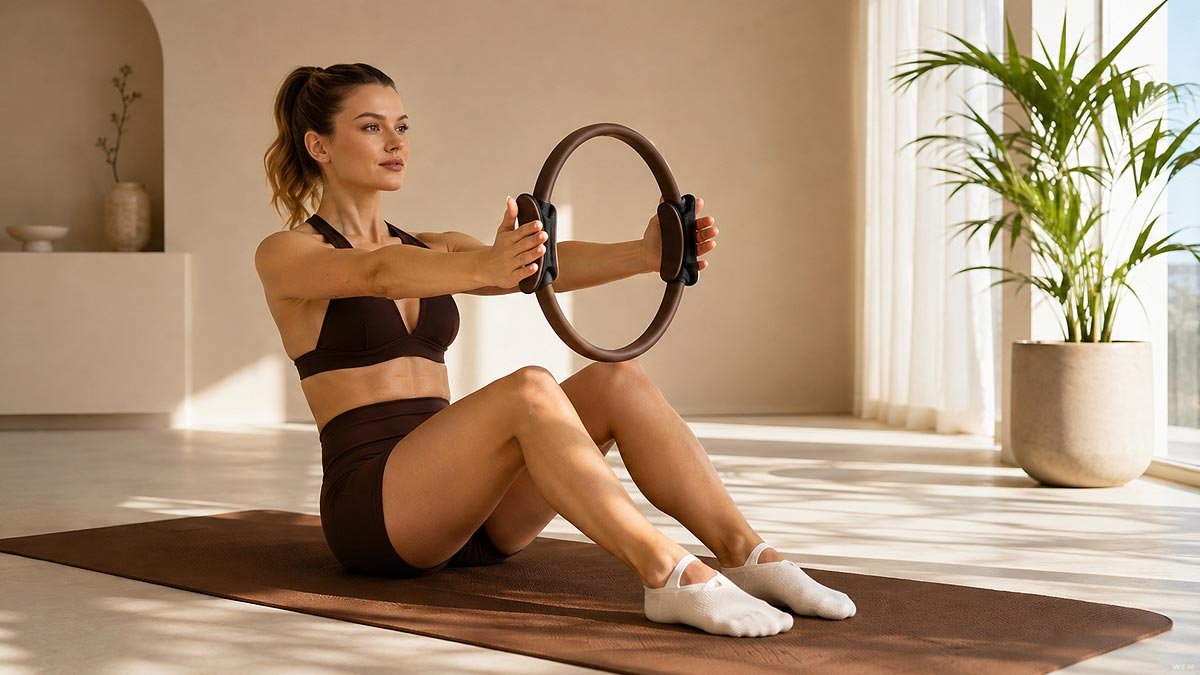
How to Use a Pilates Ring for a Simple Summer Home Workout : Ever squeezed a pillow between your knees and felt your inner thighs wake up? A Pilates ring works on that same idea, only with more structure. It’s a small, bendy circle that adds gentle resistance to bodyweight moves.
In the next few minutes, you’ll learn how this little tool works, three beginner moves to try today, and easy form tips. You’ll also see how a short routine can fit into a packed week.
How Does a Pilates Ring Add Resistance to Your Workout?
A Pilates ring adds resistance when you press or pull against its flexible sides. That gentle pushback asks your muscles to work a bit harder than they would on their own.
The ring is also called a magic circle. It’s great for what many people call isometric work. That simply means your muscles stay active while holding steady, without big swings.
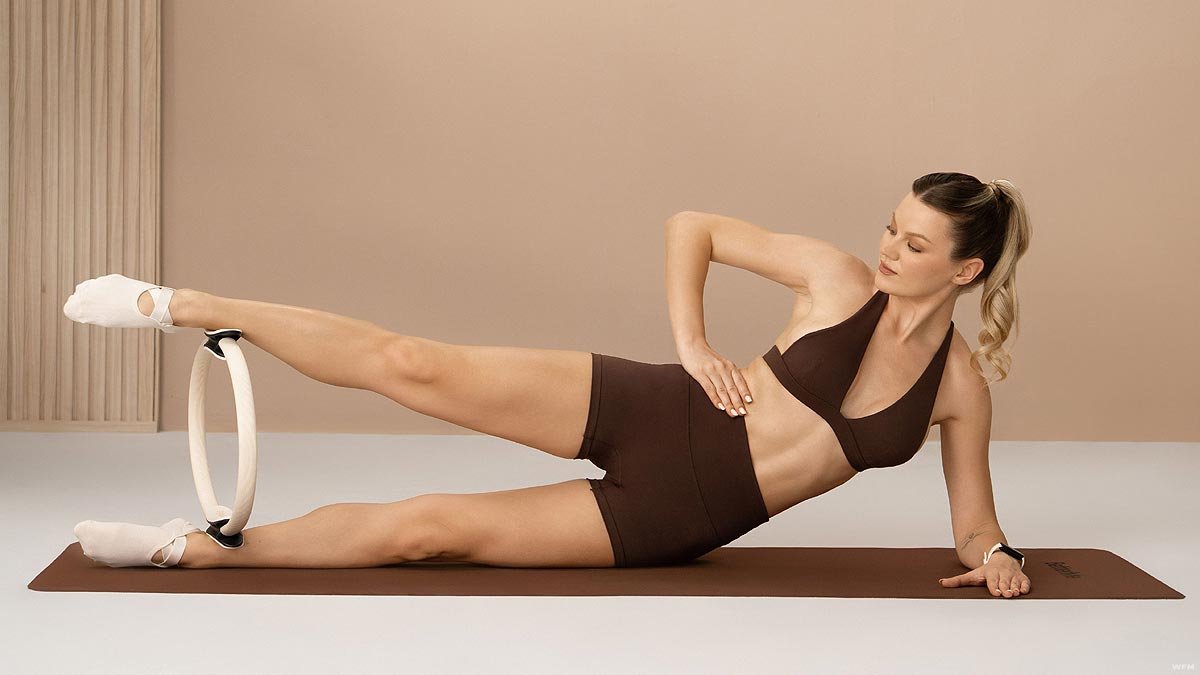
Here’s why that helps you:
- Controlled effort: You slow down and feel each rep clearly.
- More engagement: Your inner thighs, arms, chest, glutes, and core stay switched on.
- Movement cue: The ring’s resistance hints when you press evenly on both sides.
You don’t need a death grip. A steady, moderate squeeze tends to do more than a tight one. The ring won’t outpace other tools, but it adds variety in a tiny package.
How Does a Magic Circle Compare to Other Home Tools?
A magic circle feels different from bands or dumbbells. Each tool has its own strengths and best moments.
| Tool | How It Feels | Great For | Storage |
| Magic circle | Steady squeeze or press | Inner thighs, arms, core | Very compact |
| Resistance band | Stretchy pull | Many angles, full body | Pocket-sized |
| Light dumbbells | Added weight | Building strength | Needs more room |
Pick what suits your space and goals. Many people enjoy rotating a few.
What Are Three Pilates Ring Exercises for the Inner Thighs and Arms?
Here are three beginner-friendly moves to try with a resistance ring. Each one uses slow, gentle effort to focus on specific muscle groups.
Quick note: these moves focus on and engage your inner-thigh muscles. They don’t spot-reduce fat in one area, since bodies don’t slim down on command.
1. Inner-Thigh Ring Squeeze
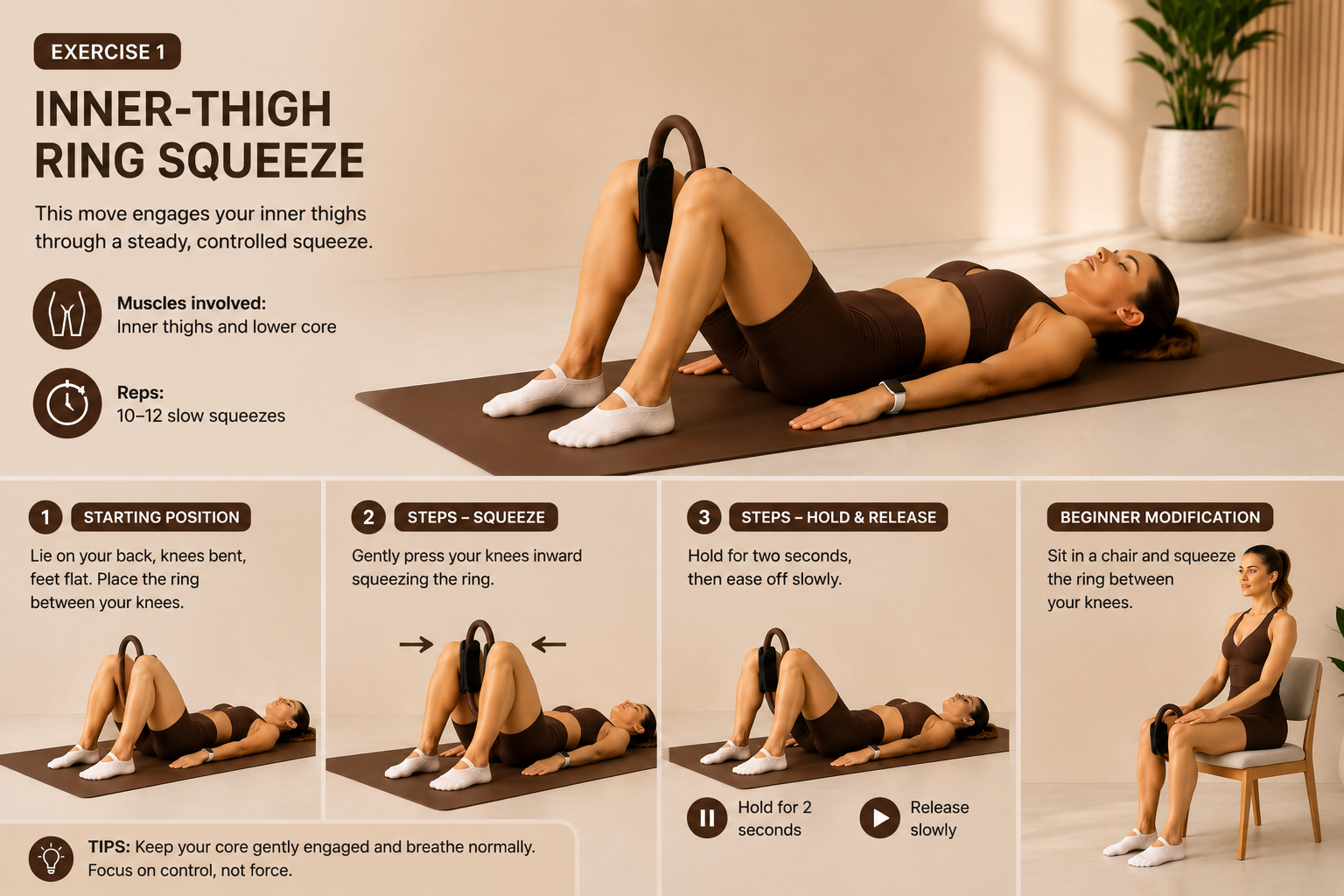
This move engages your inner thighs through a steady, controlled squeeze.
- Starting position: Lie on your back, knees bent, feet flat. Place the ring between your knees.
- Steps: Gently press your knees inward. Hold for two seconds, then ease off slowly.
- Muscles involved: Inner thighs and lower core.
- Reps: 10–12 slow squeezes.
- Beginner modification: Sit in a chair and squeeze the ring between your knees.
2. Seated or Standing Chest Press
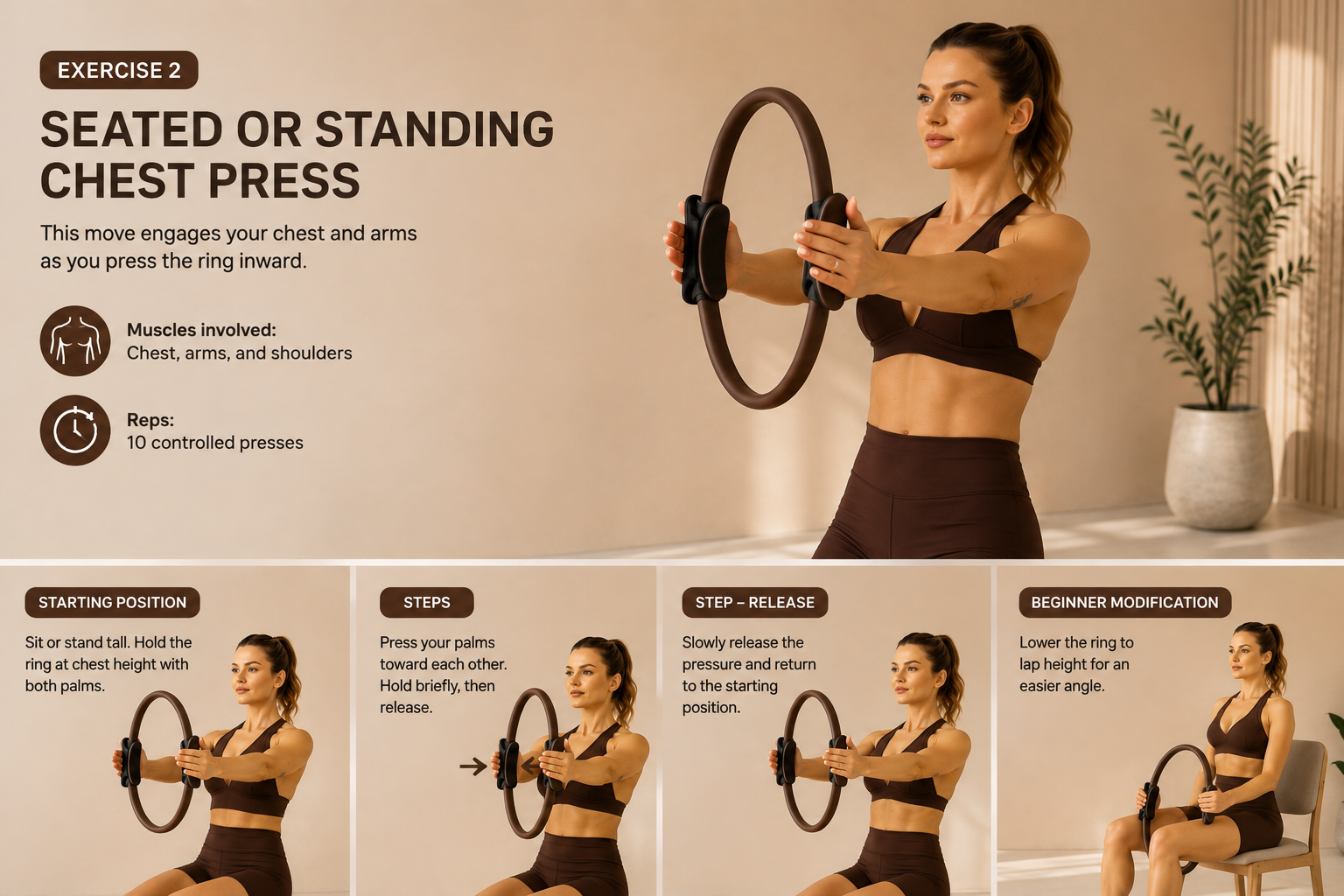
This move engages your chest and arms as you press the ring inward.
- Starting position: Sit or stand tall. Hold the ring at chest height with both palms.
- Steps: Press your palms toward each other. Hold briefly, then release.
- Muscles involved: Chest, arms, and shoulders.
- Reps: 10 controlled presses.
- Beginner modification: Lower the ring to lap height for an easier angle.
3. Bridge With Ring Squeeze
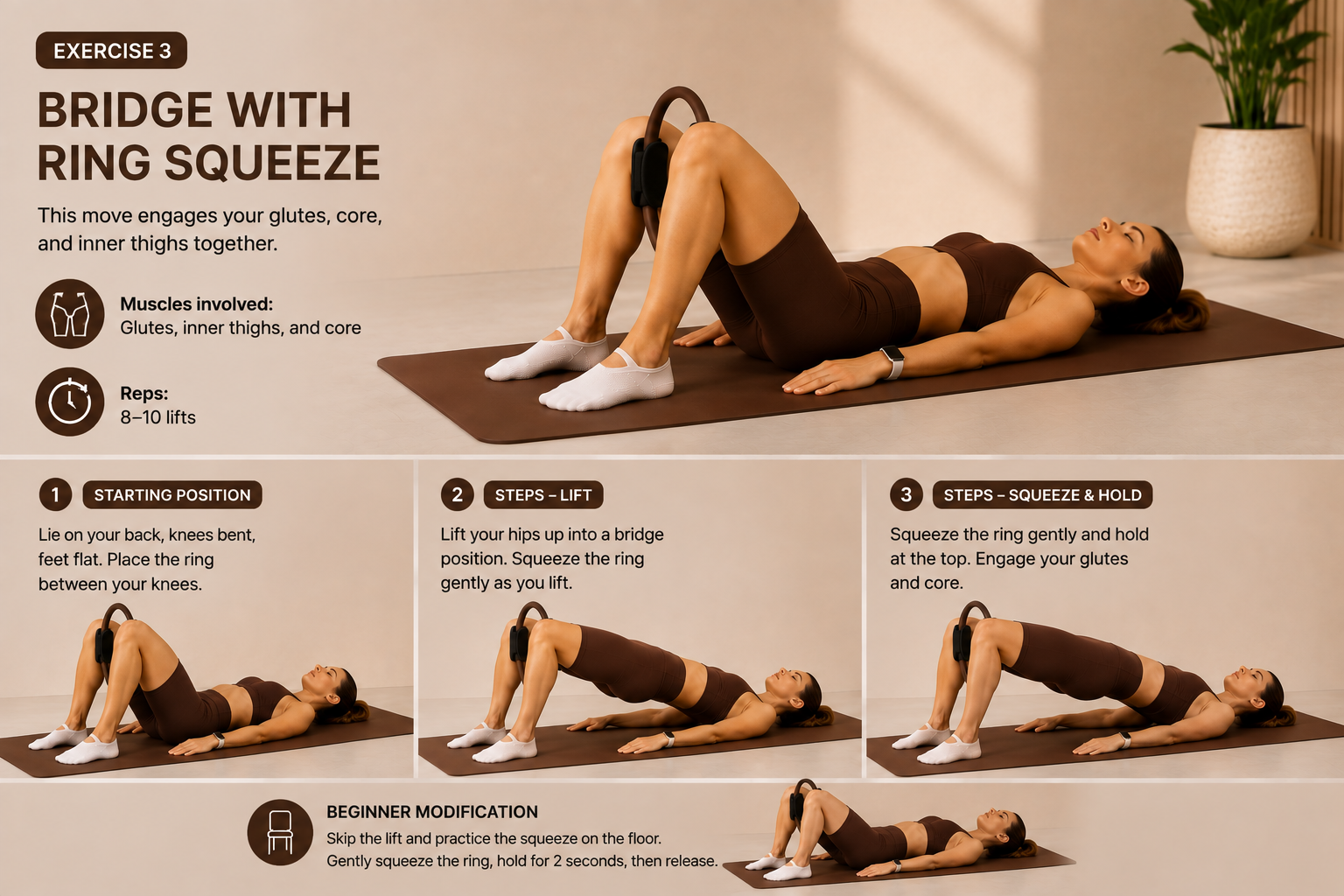
This move engages your glutes, core, and inner thighs together.
- Starting position: Lie on your back, knees bent, ring between your knees.
- Steps: Lift your hips into a bridge. Squeeze the ring gently while you hold.
- Muscles involved: Glutes, inner thighs, and core.
- Reps: 8–10 lifts.
- Beginner modification: Skip the lift and practice the squeeze on the floor.
Go slow through each one. Clean movement beats rushed reps every time.
Why Is a Magic Circle Useful for Home Workouts?
A magic circle is useful at home because it’s small, light, and ready whenever you are. You can keep it by the couch and grab it during a quick break.
Magic circle exercises fit tight spaces and short routines beautifully. Here’s what makes the ring handy:
- Compact: It slides under a bed or into a drawer.
- Portable: Toss it in a bag for travel days.
- Versatile: Use it for upper-body, lower-body, and core moves.
- Low-impact friendly: It pairs nicely with mat work and gentle routines.
When you shop for one, look for a ring with steady resistance that feels comfy to hold. If you’d like an easy starting point, the Pilates ring collection can be one practical option for short, full-body sessions. Think of it as a helpful extra, not a must-have.
What Should You Look for in a Resistance Ring?
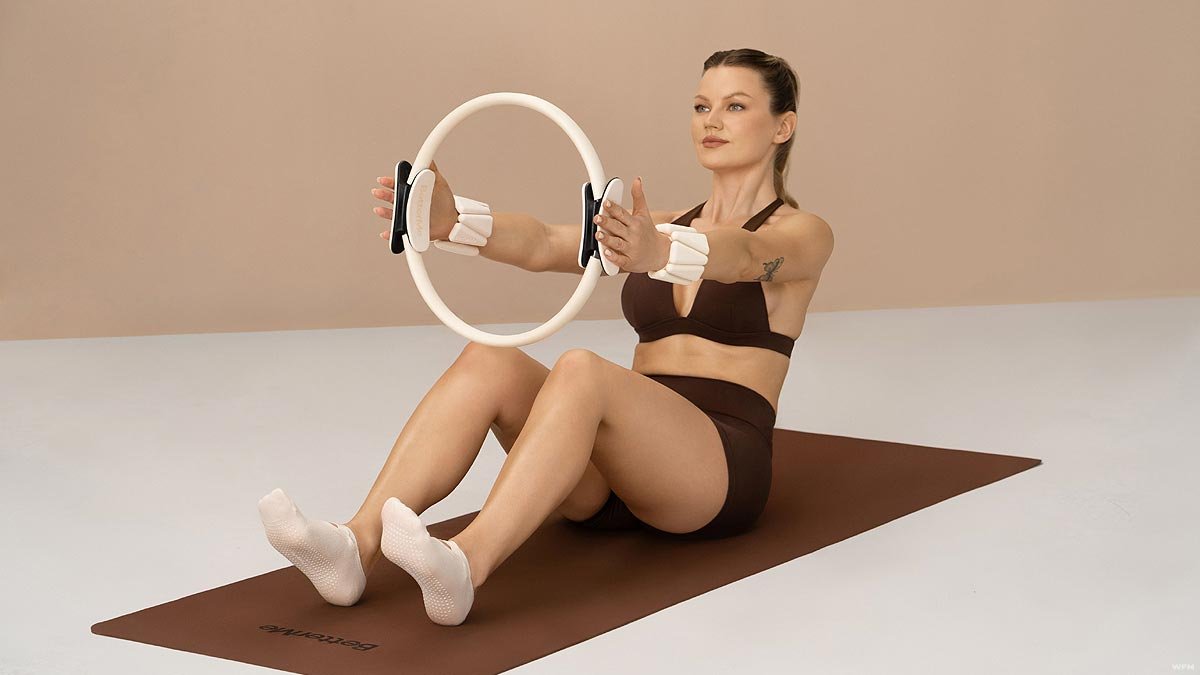
The right resistance ring feels comfortable and steady in your hands. A few simple features can make the ring easier to use.
| Feature | Why It Helps |
| Padded grips | Softer on hands and legs |
| Moderate flex | Gives steady, manageable resistance |
| Right size | Fits easily between knees or palms |
Choose what feels good for your body and your space.
How Can Beginners Use a Pilates Ring With Proper Form?
Good form starts with control, not pressure. More squeezing isn’t automatically better.
Keep these tips in mind:
- Aim for a steady, moderate press, not a hard clamp.
- Keep your shoulders relaxed, away from your ears.
- Hold a neutral back, neither arched nor rounded.
- Move slowly and breathe normally throughout.
- Choose a resistance level you can control without straining.
- Pause and rest if a move feels uncomfortable.
Controlled movement matters more than chasing high rep counts. A few clean reps tend to serve you better than many rushed ones.
Can a 15-Minute Pilates Ring Workout Be Worth Trying?
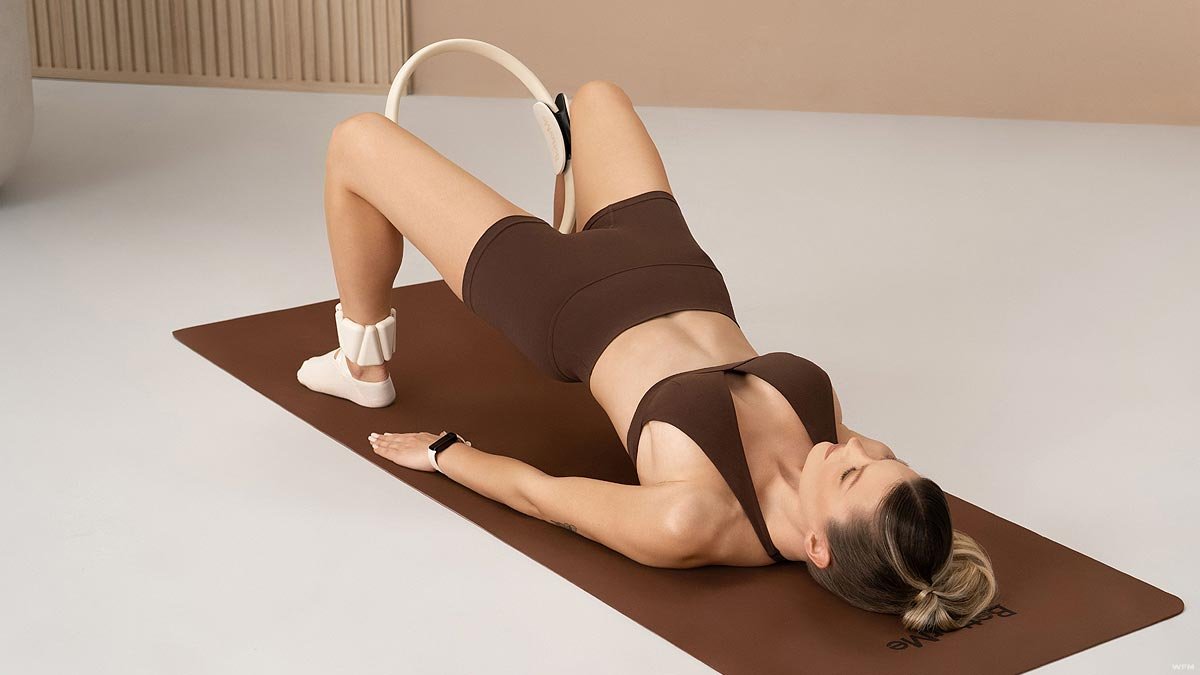
A 15-minute home pilates workout can be a practical way to add gentle resistance and movement to your day. Done often, short sessions stack up over time.
Your results depend on several things, including:
- Exercise choice and technique: The moves you pick and how well you perform them shape which muscles work and how useful the session feels.
- Resistance level and how often you train: A ring that feels challenging enough, paired with regular practice, can make short workouts more worthwhile over time.
- Overall daily activity: What you do outside the workout, like walking or moving more during the day, adds to your total effort.
- Nutrition and rest: Eating enough and giving your body downtime may support how energized and consistent you feel.
Think of low-impact ring work as a tool for consistency, not a shortcut. Showing up regularly, even briefly, tends to matter most.
Frequently Asked Questions
How often can you use a magic circle?
For many people, 2–4 short sessions a week feels manageable. Spread them out so your muscles get rest in between. Consistency tends to matter more than long, intense days.
Do you need any other equipment?
No, a mat is a nice extra but optional. The ring works on its own for many moves. A towel or cushion can add comfort if you’d like.
Can beginners use a Pilates ring?
Yes, the ring tends to suit beginners and seasoned movers alike. You control the squeeze, so the effort adjusts to you. Start light and build slowly.
A Pilates ring is a small tool that can add gentle resistance to home routines. You can use it for inner-thigh, arm, and core-focused moves. Focus on form, breathe easy, and start with a short routine you can repeat. Your next step? Pick one move from above and try it today. Use this guide to build a quick at-home routine for days when you’re short on time