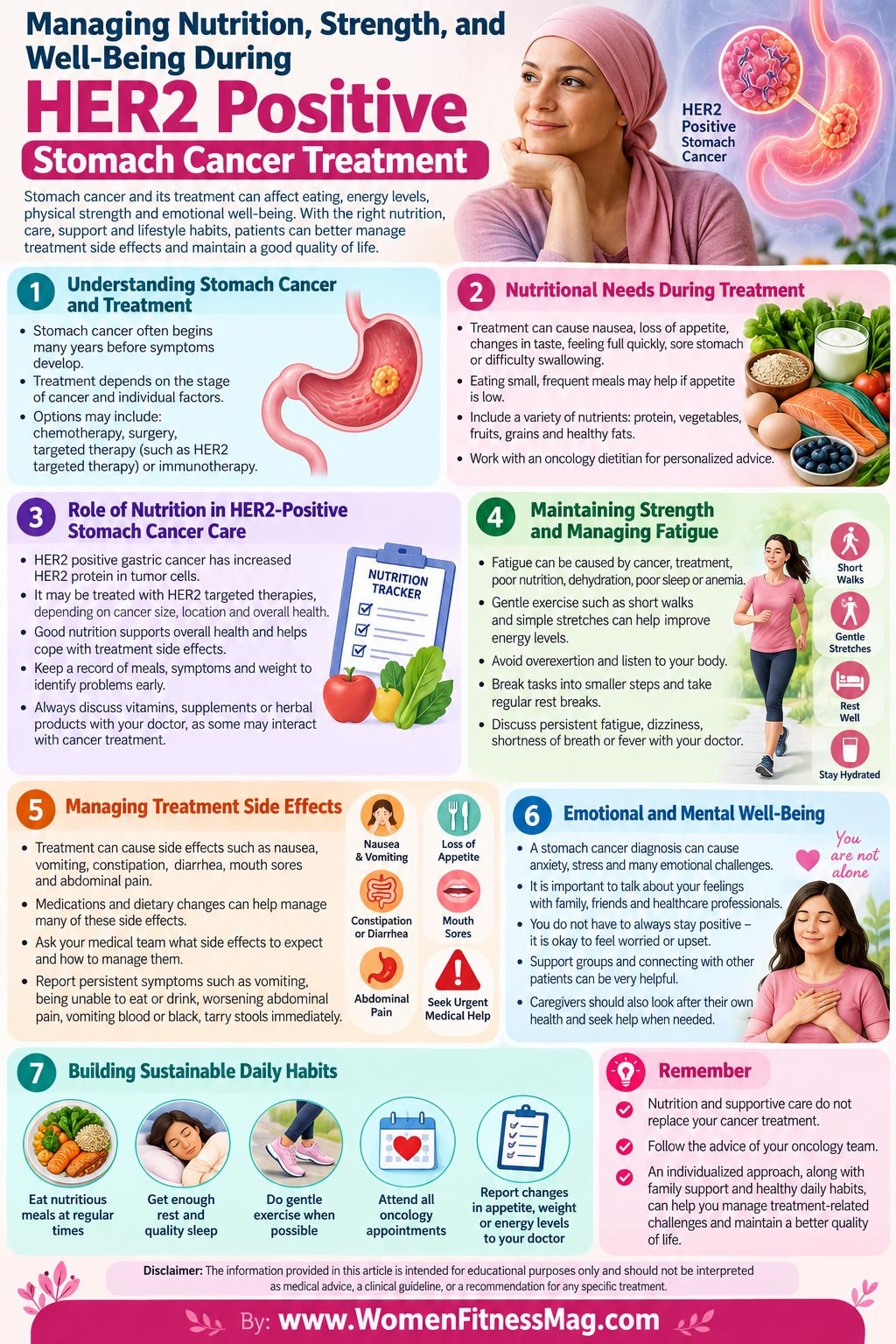

Managing Nutrition, Strength, and Well-Being During HER2 Positive Stomach Cancer Treatment : When someone is diagnosed with stomach cancer, their usual way of life can be affected not only by the illness itself but also by the treatments given to fight the disease. Eating well, remaining strong and managing to cope with day-to-day life while receiving treatment for cancer can all present difficulties for the cancer patient. It is also important to remember that the patient’s family and friends will also be affected by the diagnosis of stomach cancer.
Stomach cancer begins many years before symptoms develop in the lining of the stomach. Treatment for stomach cancer depends on the stage of cancer as well as other factors about the patient and their cancer. Treatment may include chemotherapy, surgery, targeted therapy or immunotherapy. It is very important for patients and their families to understand the effects of treatment on the body.
Understanding Nutritional Needs During Treatment
Stomach cancer as well as its treatment for stomach cancer can cause nausea, loss of appetite, changes in taste, the feeling of being full quickly after eating a small amount of food and also a sore stomach or abdominal pain. In addition, some people with stomach cancer have difficulty swallowing food and as a result, lose weight. Even after having surgery for stomach cancer to remove part of the stomach, some patients experience nausea, vomiting, stomach pain, diarrhea or feel full after eating a small amount of food.
If a patient has a poor appetite and can only eat small amounts, then eating more frequently throughout the day may help. Meals should contain a variety of nutrients including protein, vegetables, fruits, grains and healthy fats. Examples of such foods include eggs, yogurt, fish and lentils. Again, these foods must be tolerated by the individual.
Each patient’s dietary needs can vary greatly. Patients who have had stomach surgery, for example, may need to eat very small amounts, at frequent times throughout the day. Others may need to alter the type of food that they eat. An oncology dietitian can provide patients with suggestions for food and for managing symptoms while maintaining good nutrition and overall health. However, the need for patients to consume suitable fluids to combat vomiting and diarrhea is important. Patients must recognize the advice of their healthcare team regarding drinking and the type of fluid to consume and adhere to any specified fluid restriction.
The Role of Nutrition in HER2-Positive Stomach Cancer Care
Gastric cancer which is HER2 positive contains tumor cells which have increased amounts of HER2 protein. This type of gastric cancer is sometimes treated with HER2 targeted therapies. However, whether a patient is treated with these types of cancer medicines depends on the size and location of the cancer, as well as the patient’s overall health.
Nutritional support in general is important to maintain the general health of a cancer patient and to help them cope with the side effects of their cancer treatment. However, it is important to remember that nutritional support does not replace the cancer treatment that has been recommended by the cancer treatment team for the individual’s specific cancer.
Dependence on food for energy may vary between patients depending on their type of cancer treatment. Keeping a record of the patient’s meals, their symptoms and their weight can highlight any problems with their nutrition early on. Your oncology team can offer guidance on all types of nutritional supplements including vitamins and some herbal products. However, some of these may interact with your cancer treatment or cause other serious side effects, so always check with your doctor before taking any.
Patients and families seeking information about her2 positive stomach cancer treatment should also understand the importance of maintaining adequate nutrition and discussing any dietary concerns with their healthcare team.
Maintaining Strength and Managing Fatigue
Some causes of fatigue include cancer itself and our treatment, lack of nutritious eating, feeling dehydrated, poor sleep and or being anemic. Healing and working to look best can be done by completing short walks and even simple stretches. Many cancer patients find that some patients may experience improved energy levels when done correctly and in moderation. As with any exercise program, the patient must listen to their body and stop immediately should they feel any increase in symptoms.
This means patients should avoid overexerting themselves. Try to break up tasks to complete smaller jobs throughout the day. Ask for help when needed to complete tasks around the house. Take regular breaks to rest when needed throughout the day.
Persistent fatigue or other symptoms such as dizziness, shortness of breath, fever or others that are worrying, need to be discussed with doctor as soon as possible. They may indicate an underlying problem that needs to be treated by doctor.
Managing Treatment Side Effects
Cancer treatments can have many different side effects. The patient and their family need to be aware of all the side effects that can occur with the patient’s specific treatment and how they can be managed safely. The patient can be prescribed medications to control side effects such as nausea and vomiting and there are dietary changes that can help with side effects such as constipation and diarrhea and mouth sores.
Ask medical team what side effects to expect from treatment and what to do about them. Side effects can be treated with prescription and over-the-counter medicines as well as by following a special diet. However, oncology team can give you the best advice on how to follow a special diet during cancer treatment.
Monitoring symptoms and recording how frequently they occur can inform the doctor as to whether the patient has additional needs. Reporting of persistent symptoms such as vomiting, being off food, worsening abdominal pain or being unable to maintain fluids, to name but a few, is required urgently. Vomiting blood or passing black, tarry stools requires immediate medical attention.
Families can play important roles by providing stomach cancer patients with healthy meals, management of patients’ medications, transport to and from treatments, and support in keeping a comfortable home environment.
Supporting Emotional and Mental Well-Being
Of course, it is well understood by many that having stomach cancer can give rise to as much emotional distress and concern as there is caused by the physical symptoms of the cancer itself and its treatment. The patient and their loved ones will likely have to come to terms with the anxiety caused by the uncertainty of treatment, and the effects on work, on family, and on finance.
Discussing the feelings and concerns of a stomach cancer patient with their family and friends is very important. However, they should not feel forced to remain positive. Patients and their families should communicate openly and receive the support and understanding they need from others. Healthcare professionals and other cancer patients and their families can also provide valuable support to patients and their families dealing with the emotional effects of stomach cancer.
Support from others, including cancer support groups, can also be and may be helpful for individuals to explore and learn ways to deal with their feelings and anxiety with other individuals experiencing similar situations with the help of a trained professional. The caregiver also must maintain his/her health and identify when he/she needs help in order to be able to continue to provide support to the patient. Sharing responsibilities with other family members and close friends is also helpful in maintaining a healthy and supportive environment.
Building Sustainable Daily Habits
Establishing routines can help. This can include having meals at regular times, having rest when needed, doing gentle exercise when possible, and attending all oncology appointments.
Remember that as you go through treatment program, you will most likely go through several changes, such as decrease in appetite, weight loss, decrease in energy, etc. Report any of these changes to oncologists and get the necessary changes in treatment and in supportive care. Maintaining physical strength and nutrition, as well as emotional well-being, during stomach cancer treatment is important. An individualized approach and support from family and the oncology team may assist patients in managing treatment-related challenges.
Disclaimer: The information provided in this article is intended for educational purposes only and should not be interpreted as medical advice, a clinical guideline, or a recommendation for any specific treatment.
Related Infographics: