



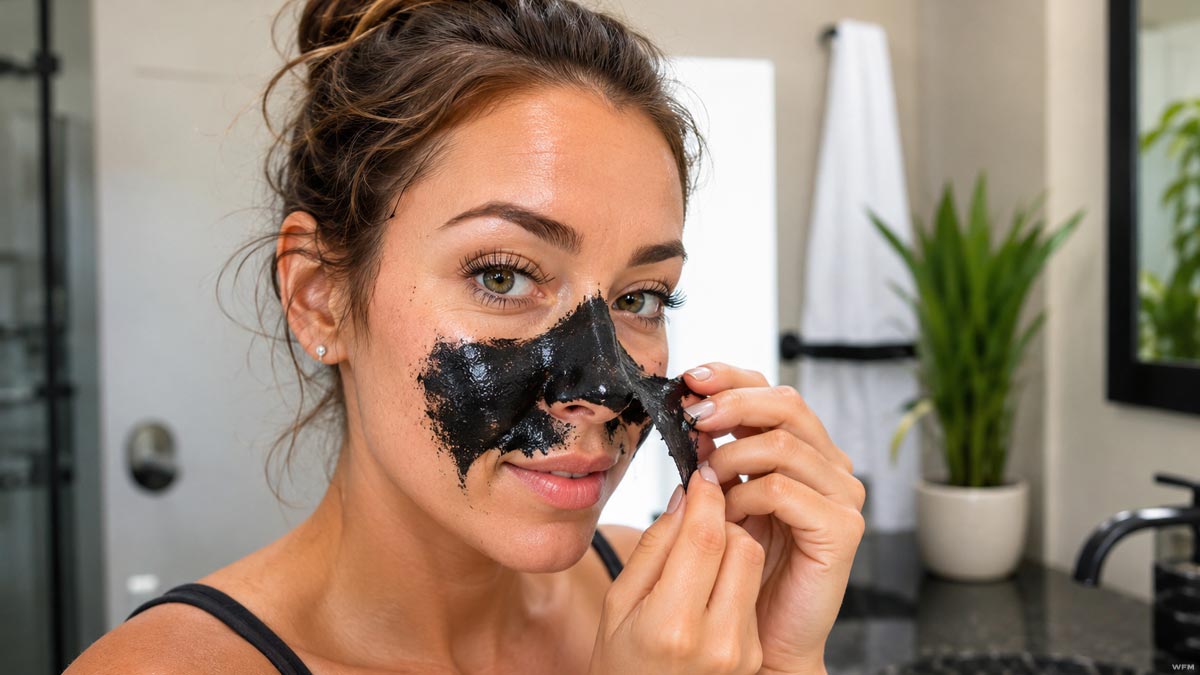
Do Black Face Masks Remove Blackheads? What Dermatologists Want You to Know : You’ve seen them all over social media: the dramatic videos of people peeling off jet-black masks, revealing what appears to be a forest of tiny blackheads extracted from their pores. The question on everyone’s mind is simple – do black face masks remove blackheads?
It’s an understandable curiosity, because the visual promise is incredibly compelling. But like many viral skincare trends, the reality is far more nuanced. In this guide, we’ll walk through exactly how these masks work, what clinical evidence actually says, the risks most beauty influencers don’t mention, and the dermatologist-approved alternatives that really deliver results.
Key Takeaways
- Peel-off black face masks rarely remove blackheads effectively. While they might pull out surface-level debris and vellus hairs (the fine baby hairs on your face), they do not reach the deep pore clogs that constitute true blackheads.
- Charcoal itself has strong absorption properties, but its benefits in rinse-off or peel-off formulas lack solid clinical evidence for acne or comedone removal.
- Safer, research-backed alternatives exist—including salicylic acid, clay masks, and retinoids—that address the root cause of blackheads without risking skin barrier damage.
- Post-treatment skin recovery matters just as much as the blackhead removal itself. Incorporating a high-purity PDRN-based overnight mask helps repair the skin barrier after exfoliation or extraction, preventing rebound oiliness and irritation.
What Are Black Face Masks and How Do They Work?
A black face mask for blackheads typically refers to a mask that gets its dark color from activated charcoal. These masks come in two main forms: the peel-off mask that dries into a rubbery film you physically strip away, and the rinse-off clay or cream mask that you wash off with water. Both types are often marketed as a deep pore cleansing mask or a charcoal face mask blackheads solution, promising to draw out impurities and leave skin visibly clearer.
The Science Behind Activated Charcoal
Activated charcoal is produced by heating carbon-rich materials—like bamboo, coconut shells, or wood—to extremely high temperatures in a controlled environment. This process creates millions of microscopic pores across the charcoal’s surface, dramatically increasing its surface area and its ability to trap (adsorb) molecules, toxins, and chemicals. Because of this structure, activated charcoal theoretically acts like a magnet for oil and debris when applied to the skin.
However, there’s an important distinction between what works in a laboratory and what works on your face. A 2024 systematic review published in the International Journal of Community Medicine and Public Health concluded that clinical trials on activated charcoal’s efficacy in skincare are “urgently needed” and that current cosmetic claims for acne and blackheads are not yet supported by solid scientific evidence. While pure activated charcoal scores a 1 (lowest risk) on the EWG safety scale—meaning it’s generally non-irritating—its real-world ability to clear blackheads remains largely anecdotal.
Do Black Face Masks Remove Blackheads?
This is the core question: do black face masks remove blackheads the way we hope? Let’s break down what happens when you apply one.
What the Mask Actually Pulls Out
When you peel off a black mask, you’ll often notice tiny, hair-like filaments stuck to the sheet. It’s easy to mistake these for blackheads, but in most cases, what you’re seeing are sebaceous filaments—natural, tube-like structures that channel oil from your pores to the skin’s surface—and vellus hairs. True blackheads, or open comedones, form much deeper within the hair follicle. They consist of oxidized sebum and dead skin cells that have formed a hardened plug, and they sit well below the surface a peel-off mask can reach.
The Healthy tested a viral peel-off suction mask firsthand and reported zero blackhead removal after three separate attempts, describing the experience as “comparable to peeling dried superglue from your eyelids.” That personal account aligns with dermatologist consensus. For a more detailed breakdown, our post do black face masks remove blackheads explores the mechanics in depth.
What Dermatologists Actually Say
Board-certified dermatologists emphasize that while a charcoal face mask blackheads formula can temporarily reduce surface oil and make pores appear smaller, the effect is superficial. Cleveland Clinic experts note that blackheads require ingredients capable of penetrating the pore lining to dissolve the keratin plug—something that a peel-off mask, which merely adheres to the topmost layer of skin, cannot do. The American Academy of Dermatology (AAD) similarly warns that facial masks cannot replace medical treatment for acne, including blackheads, and should only provide a complementary boost.
In short, if you’re expecting a peel-off mask to physically “yank out” blackheads from deep within your pores, the evidence simply isn’t there.
Potential Risks of Peel-Off Black Masks
The lack of proven efficacy is only half the story. The more pressing concern is what these peel off mask blackheads products can do to your skin barrier.
Immediate Physical Damage
Peel-off masks work by forming a tight film that adheres not just to debris, but also to the protective outermost layer of your skin—the stratum corneum—and to vellus hairs. When you pull the mask away, you’re not selectively removing blackheads; you’re stripping everything in its path. This can cause:
- Micro-tears in the skin
- Redness and inflammation
- Broken capillaries (telangiectasia), especially around delicate areas like the nose and cheeks
- Increased sensitivity and a stinging sensation for days afterward
Health.com cautions that charcoal peel-off masks can lead to “excessive skin peeling,” scarring, and even infection in some individuals. People with sensitive skin, rosacea, eczema, or active acne should avoid these masks entirely.
Regulatory and Ingredient Concerns
Not all charcoal beauty products are regulated by the FDA in the same way as drugs. Some may contain undisclosed fragrances, preservatives, or alcohol that further irritate the skin. Even when used carefully, a peel-off mask is best limited to the T-zone and should never be applied to dry, sunburned, or compromised skin. After any peeling treatment, it’s important to soothe and repair the skin. Our guide on peel off mask after face pack walks through the right post-mask routine to minimize redness and restore hydration.
Safer, Dermatologist-Approved Blackhead Removal Alternatives
You don’t have to choose between painful peel-off masks and living with blackheads. Dermatologists consistently recommend a handful of ingredients that treat the root cause of comedones—excess oil and dead skin cell buildup. Below is a comparison of the most effective options.
| Ingredient | How It Works | Typical Concentration | Key Evidence |
| Salicylic Acid (BHA) | Oil-soluble; penetrates pores to dissolve dead skin and sebum plugs | 2% (OTC washes, leave-on) | 2024 clinical trial: 88% comedone clearance at 12 weeks, lower post-inflammatory hyperpigmentation vs. benzoyl peroxide |
| Glycolic Acid (AHA) | Water-soluble; exfoliates the skin surface, improves texture | 10% (cleansers, peels) | AAD 2024 guidelines include as a recommended exfoliant for acne |
| Adapalene (Retinoid) | Normalizes skin cell turnover, prevents new plugs from forming | 0.1% (OTC) | Strong recommendation by AAD for comedonal acne |
| Azelaic Acid | Reduces keratinocyte buildup, mildly anti-inflammatory | 10–20% | Especially beneficial for sensitive skin; safe for long-term use |
| Clay (Kaolin/Bentonite) | Absorbs surface oil and impurities, helps unclog pores without stripping | N/A (mask formulation) | Frequently recommended alongside active ingredients for oily skin |
These methods answer the question how to remove blackheads safely and sustainably. Salicylic acid, for instance, has been conditionally recommended by the AAD as a first-line approach for non-inflammatory acne. Unlike a blackhead removal mask that aims for instantaneous results, these ingredients work gradually over 4–6 weeks to normalize pore function, preventing new blackheads from forming.
Two important cautions: never over-exfoliate—doing so can trigger compensatory oil production that makes blackheads worse—and always pair active ingredients with a sunscreen of SPF 30 or higher, since exfoliating acids increase UV sensitivity.
How to Choose the Right Blackhead Mask for Your Skin
With so many masks on the market, identifying the best mask for blackheads comes down to matching ingredients to your skin type. Not every deep pore cleansing mask is created equal.
If you have oily or combination skin, look for a mask that combines a clay base—such as kaolin or bentonite—with a BHA like salicylic acid. This pairing draws out surface oil while chemically exfoliating inside the pore. For dry skin, avoid peel-off formulas entirely; instead, opt for a rinse-off cream mask that includes hydrating ingredients like hyaluronic acid, squalane, or glycerin to prevent tightness. For sensitive skin, azelaic acid at a low concentration or a mild clay mask without fragrance or alcohol offers the gentlest approach.
Reading Labels Like a Dermatologist
When scanning ingredient lists, keep these tips in mind:
- Seek: Salicylic acid, glycolic acid (≤10%), azelaic acid, kaolin, bentonite, niacinamide, and hyaluronic acid
- Avoid: Alcohol denat., witch hazel (astringent form), fragrance, essential oils, and physical scrubs like crushed walnut shells, which can create micro-abrasions
Limit mask usage to once or twice a week to avoid compromising your moisture barrier. Even the best formula can cause trouble if overused.
Post-Treatment Care — Why Your Skin Needs Recovery
Whether you’ve used a chemical exfoliant, a clay mask, or a professional extraction, your skin’s protective barrier will benefit from a dedicated recovery phase. After how to remove blackheads treatments, the skin may feel temporarily dry, slightly sensitive, or more prone to environmental stress. This is where a well-formulated overnight mask makes a real difference.
The Role of High-Purity PDRN
PDRN (Polydeoxyribonucleotide) is a breakthrough regenerative ingredient derived from highly polymerized DNA fragments. The Douce Aura formula uses High-purity PDRN — a molecule with 98% similarity to human DNA. it functions as a biomimetic signal that activates the skin’s intrinsic repair mechanisms—stimulating collagen synthesis, supporting barrier function, and delivering deep, lasting hydration. Unlike occlusive balms that simply sit on top of the skin, a high-purity PDRN mask works with your cells to rebuild from within.
Pier Augé’s strategy doesn’t stop at extraction—it extends into night-time repair. Their Douce Aura Overnight Mask uses a cream-to-veil texture that absorbs transparently, so you can sleep without worrying about residue. Independent clinical testing on 33 women showed a +52.69% radiance boost and +45.86% hydration surge after just 15 minutes, and a 20.69% reduction in wrinkle depth over 14 days. For anyone using acids or professional extractions, this mask offers institute-grade PDRN to soothe and restore, making it a natural companion to a blackhead-clearing routine. Learn more about their technology at their PDRN mask guide.
Frequently Asked Questions
1. Do black face masks actually remove blackheads?
No—at least not the way most people expect. Peel-off black masks can remove surface debris and sebaceous filaments, but they cannot extract the deep oxidized plugs that define a true blackhead. Research-backed methods like salicylic acid and retinoids are far more effective.
2. What pulls blackheads out of pores?
Chemical exfoliants, particularly salicylic acid, penetrate the pore lining and dissolve the mixture of dead skin cells and sebum that forms the blackhead plug. This gradual approach clears the pore without the trauma associated with physical extraction or peel-off masks.
3. Are charcoal peel-off masks safe?
For some skin types yes, but they carry meaningful risks. They can cause redness, broken capillaries, and even infection if used too aggressively or on sensitive skin. The AAD recommends doing a patch test first and never using them on irritated or sunburned skin.
4. How often should I use a blackhead mask?
For chemical exfoliant or clay-based masks, once to twice a week is generally sufficient. Over-masking can impair your skin’s barrier, leading to increased oil production and more blackheads. Start with once a week and adjust based on your skin’s response.
5. What’s better for blackheads — clay or charcoal masks?
Clay masks have more clinical precedent for absorbing oil and temporarily refining pores. Charcoal masks are popular for their “detox” appeal, but lack the same level of peer-reviewed support. Many of the best masks for blackheads combine a clay base with salicylic acid for a dual-action approach.
When you look past the viral hype, the evidence paints a clear picture: do black face masks remove blackheads in a lasting, meaningful way? Not really. The satisfying peels you see online are mostly pulling out fine hairs and surface debris—not the deep-set plugs that define a true blackhead. A far more reliable path combines science-backed exfoliants, a gentle mask that matches your skin type, and proactive barrier repair with high-purity PDRN. Your pores—and your skin’s long-term health—will thank you for it.