



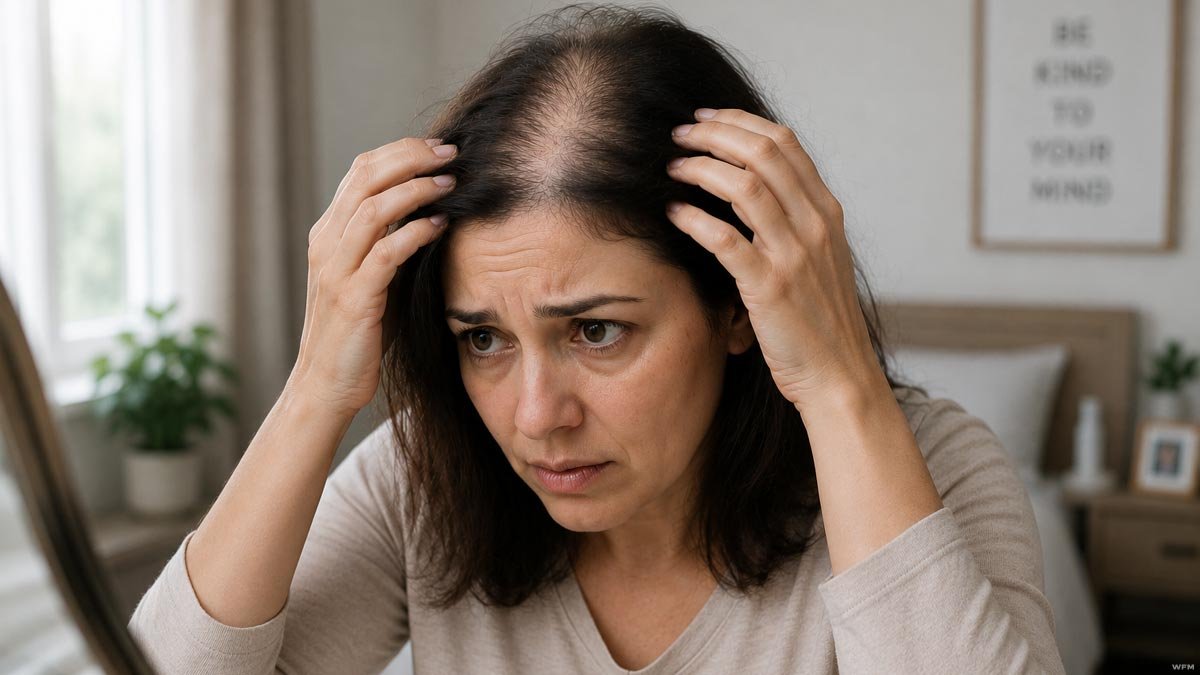
Understanding the Causes of Female Hair Thinning : As a dermatologist, one of the most common concerns I hear from women is, “My hair doesn’t look the way it used to.” They describe finding more strands on their pillow, noticing a wider parting, or feeling disappointed that their once-thick ponytail has become noticeably thinner.
Unlike sudden hair loss, hair thinning in women often develops gradually. Because the change is slow, many women ignore it at first, hoping it will resolve on its own. But when the shedding continues month after month, it becomes impossible to overlook. The good news is that understanding why your hair is thinning is the first step toward restoring its health.
Why Hair Thinning in Women Is Different
Hair loss in women is very different from the classic pattern seen in men. Men often develop a receding hairline or bald spots at the crown, whereas women usually experience diffuse thinning spread across the scalp.
The central parting may gradually widen, and the hair may lose volume without creating completely bald areas. This distinction is important because the causes and treatment strategies are often different.
Female hair thinning is rarely due to a single factor. More often, it results from a combination of hormonal changes, nutritional deficiencies, stress, genetics, and scalp health issues that interact over time.
Hormones Play a Major Role
Hormones have a profound influence on the hair growth cycle. Even subtle hormonal fluctuations can affect how long hair stays in its growing phase and how quickly it enters the shedding stage.
Several hormonal conditions are commonly associated with hair thinning:
Thyroid disorders: Both an underactive and overactive thyroid can disrupt the normal hair cycle, leading to increased shedding and slower regrowth.
Polycystic Ovary Syndrome (PCOS): Elevated androgen levels in women with PCOS can gradually shrink hair follicles, resulting in thinning over the scalp, particularly around the crown.
Pregnancy and postpartum changes: During pregnancy, high estrogen levels often make hair appear fuller. However, after delivery, hormone levels decline rapidly, causing increased shedding that may last for several months.
Perimenopause and menopause: As estrogen levels naturally decrease with age, hair often becomes finer, drier, and less dense.
When hormones shift, hair follicles respond quickly, which is why identifying and correcting hormonal imbalances can make a significant difference.
Nutritional Deficiencies Can Show Up in Your Hair
Hair is not considered essential for survival, so when the body lacks nutrients, it prioritizes vital organs over hair growth.
This is why nutritional deficiencies frequently present as excessive hair shedding or thinning.
Some of the most common deficiencies linked to hair loss include:
- Low iron and ferritin levels
- Vitamin D deficiency
- Zinc deficiency
- Vitamin B12 deficiency
- Inadequate protein intake
Hair is made primarily of a protein called keratin. If your diet lacks sufficient protein, your body may struggle to produce healthy, strong hair.
Crash diets, prolonged calorie restriction, skipping meals, or digestive disorders can quietly create nutritional gaps that affect hair months later. Many women are surprised to discover that their thinning hair is related to deficiencies they never knew they had.
The Importance of Scalp Health
Healthy hair begins with a healthy scalp.
Conditions such as dandruff, seborrheic dermatitis, psoriasis, and chronic scalp inflammation can interfere with normal follicle function. Excess oil buildup or persistent irritation may create an environment that is less supportive of healthy hair growth.
Scalp circulation also matters. Hair follicles depend on a steady supply of oxygen and nutrients delivered through blood vessels.
Certain habits can place stress on the scalp over time, including:
- Frequently wearing tight ponytails or buns
- Tight braids or extensions
- Repeated heat styling
- Poor scalp hygiene
- Chronic scalp inflammation
Taking care of the scalp is just as important as caring for the hair itself.
Stress and Hair Loss Are Closely Connected
Stress is an often overlooked but very real cause of hair thinning.
A condition known as telogen effluvium occurs when physical or emotional stress pushes a large number of hair follicles into the resting phase at the same time. The shedding typically becomes noticeable two to three months after the stressful event.
Common triggers include:
- Emotional trauma or grief
- Major surgery or illness
- High fever
- Rapid weight loss
- Chronic work or family stress
Unfortunately, hair loss itself often becomes another source of anxiety, creating a cycle where stress contributes to more shedding.
Managing stress through adequate sleep, exercise, mindfulness, and emotional support can be an important part of improving hair health.
When Should You Seek Help?
If you have been experiencing hair thinning for more than a few months, or if you notice sudden excessive shedding, it is worth seeking a proper evaluation.
Blood tests, hormonal assessments, nutritional screening, and scalp examination can often reveal underlying causes that are treatable. Early intervention generally leads to better outcomes because hair follicles respond best before significant miniaturization occurs.
Conclusion
Female hair thinning is rarely caused by one single issue. More often, it is the result of hormonal changes, nutritional deficiencies, stress, genetics, and scalp health working together over time.
That is why quick fixes and trendy products rarely provide lasting solutions. The most effective approach is to understand the root cause, address the underlying factors, and give the hair the time and support it needs to recover.
If your hair has been thinning, don’t focus only on what to apply. Start by asking why it is happening. In many cases, the answer is the key to healthier hair and renewed confidence.