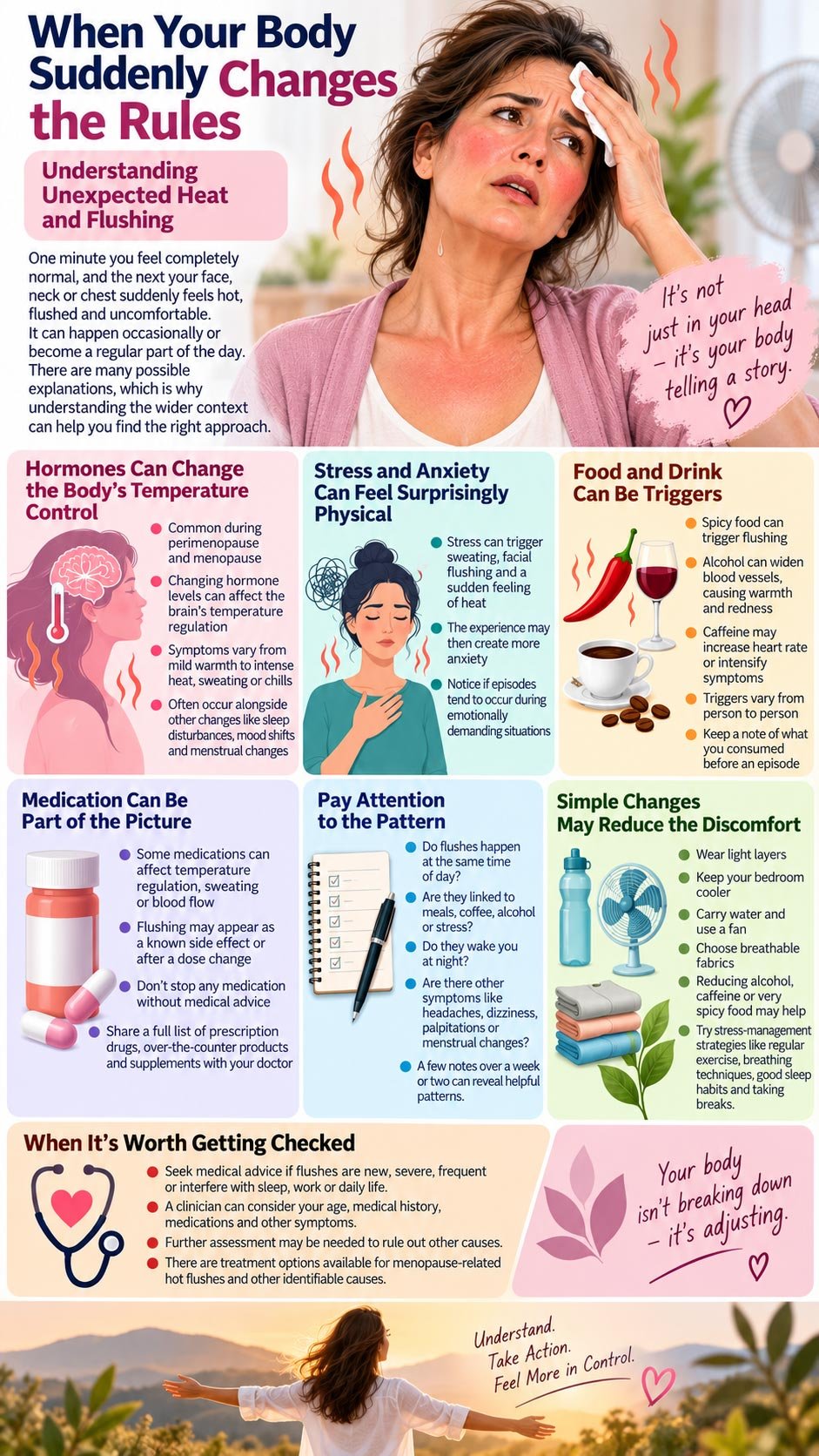
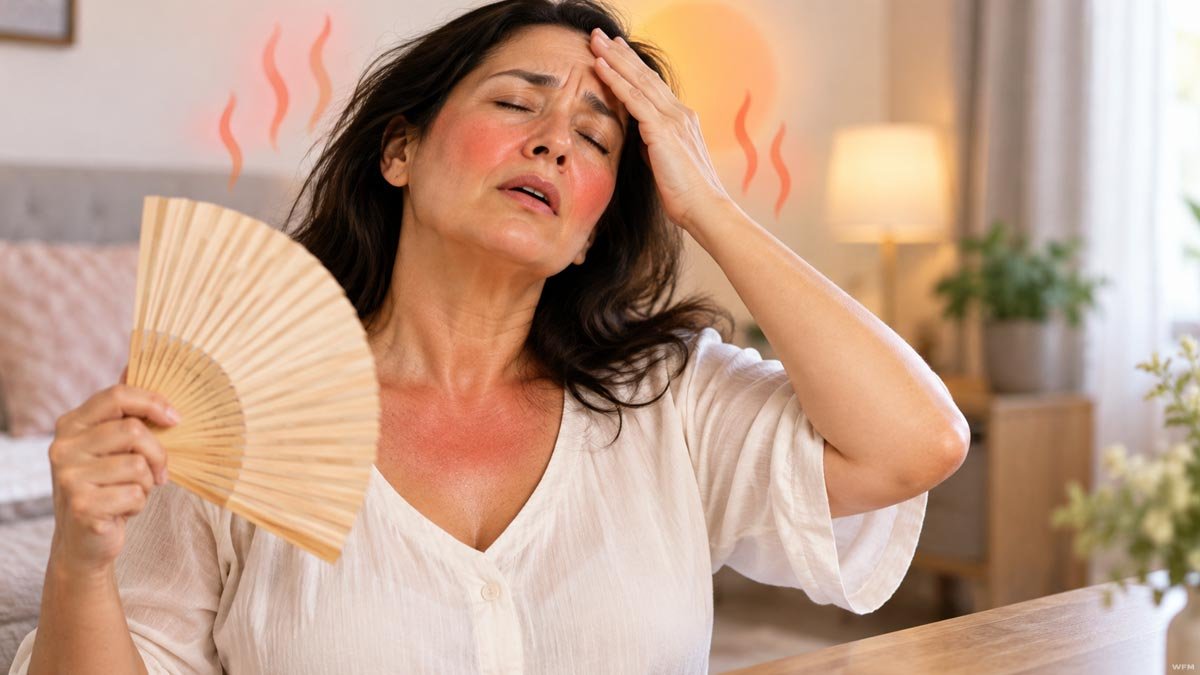
When Your Body Suddenly Changes the Rules: Understanding Unexpected Heat and Flushing : One minute you feel completely normal, and the next your face, neck or chest suddenly feels hot, flushed and uncomfortable. For some people it happens occasionally; for others, it becomes a regular part of the day. Either way, sudden heat can be surprisingly disruptive, especially when there’s no obvious trigger such as exercise, hot weather or a warm room.
There are many possible explanations for these episodes, which is why understanding the cause of hot flushes often starts with looking at the wider context rather than the heat itself. Hormonal changes are a common factor, but stress, medication, alcohol, certain foods and underlying health conditions can also play a role. The pattern, timing and other symptoms around the flush can provide useful clues.
Hormones Can Change the Body’s Temperature Control
Hot flushes are strongly associated with perimenopause and menopause, largely because changing hormone levels can affect the way the brain regulates body temperature. The body may become more sensitive to small temperature shifts, triggering a sudden feeling of heat even when the surrounding environment hasn’t changed much.
These episodes can vary significantly from person to person. Some people experience a warm face and mild sweating, while others feel an intense wave of heat across the upper body followed by chills or a racing heartbeat. They may last for a short period or recur repeatedly throughout the day and night.
Hormonal changes can also affect sleep, mood, energy levels and menstrual cycles, so hot flushes often appear alongside other changes rather than in isolation.
Stress and Anxiety Can Feel Surprisingly Physical
Stress doesn’t only exist in your thoughts. It affects breathing, heart rate, muscle tension and blood flow, which means it can sometimes produce very physical symptoms.
During periods of anxiety or intense stress, the nervous system can trigger sweating, facial flushing and a sudden sensation of heat. This can become frustrating because the experience itself may then create more anxiety, particularly if it happens in meetings, social situations or other moments where you feel self-conscious.
Noticing whether episodes tend to occur during emotionally demanding situations can be useful. That doesn’t mean the symptoms are “just stress”, but it may reveal one of the factors contributing to them.
Food and Drink Can Be Unexpected Triggers
What you eat and drink can influence body temperature more than you might realise.
Spicy food is an obvious example, but alcohol and caffeine can also trigger flushing in some people. Alcohol widens blood vessels near the skin, which can create warmth and redness, while caffeine may increase heart rate or intensify symptoms in people who are already prone to hot flushes.
The response isn’t the same for everyone. One person may notice a very clear connection between wine and flushing while another experiences no effect at all. Keeping an informal note of what you consumed before an episode can sometimes reveal patterns that would otherwise be easy to miss.
Medication Can Sometimes Be Part of the Picture
Some medications can affect temperature regulation, sweating or blood flow. Depending on the medicine, flushing may appear as a known side effect or emerge after the dose has been changed.
That doesn’t mean medication should be stopped without medical advice. In many cases, the treatment is important and there may be other ways to manage the side effect. If hot flushes begin soon after starting a new medication, however, it’s worth mentioning the timing to your doctor or pharmacist.
Providing a complete list of prescription medicines, over-the-counter products and supplements can also help identify possible interactions or contributors.
Pay Attention to the Pattern
One of the most useful things you can do is look for consistency.
Do the flushes happen at the same time of day? Do they follow meals, coffee or alcohol? Are they linked with stress? Do they wake you at night? Are there other symptoms such as headaches, dizziness, palpitations, changes to your menstrual cycle or unexplained weight changes?
You don’t need to turn yourself into a full-time symptom tracker, but a few notes over a week or two can make a medical appointment much more productive. Patterns can help separate occasional environmental triggers from something that may need further investigation.
Simple Changes May Reduce the Discomfort
Even when the underlying cause can’t be changed immediately, there are practical ways to make hot flushes less disruptive.
Wearing light layers makes it easier to cool down quickly, while keeping bedrooms cooler may help with night-time symptoms. Carrying water, using a fan and choosing breathable fabrics can also make episodes more manageable. Some people find that reducing alcohol, caffeine or very spicy food helps, particularly when they’ve already noticed a connection.
Stress-management strategies may be useful too. Regular exercise, breathing techniques, good sleep habits and taking breaks during high-pressure periods won’t necessarily eliminate hot flushes, but they may reduce one of the triggers that contributes to them.
When It’s Worth Getting Checked
Hot flushes are common, but that doesn’t mean every case should automatically be assumed to be hormonal. If the episodes are new, severe, frequent or accompanied by other concerning symptoms, it’s worth discussing them with a health professional.
Medical advice can be especially useful when symptoms interfere with sleep, work or everyday life. A clinician can look at age, medical history, medications and other symptoms to determine whether further assessment is appropriate.
There are also treatment options available for people whose hot flushes are related to menopause or other identifiable causes, and the right approach depends on individual circumstances.
The Body Usually Gives Context Along With the Heat
A sudden flush can feel random, but there’s often more information around it than first appears. Timing, triggers, hormonal changes, stress levels, medication and other symptoms can all help build a clearer picture.
The important thing is not to dismiss repeated changes simply because they’re common. Common symptoms can still deserve attention, especially when they’re affecting quality of life.
Sometimes the body changes its rules gradually, and sometimes it seems to do it overnight. Either way, understanding the pattern is the first step toward making those changes feel a little less mysterious.
Related Infographics: